Showing posts with label Military History - Books and Reading. Show all posts

Thursday, March 25, 2021

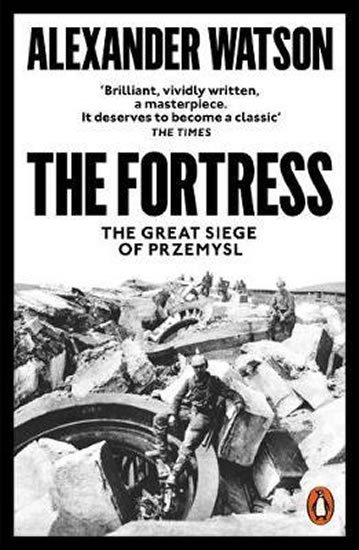
Book Review: Nicholas Watson's Fortress: The Great War Siege of Przemysl


The Fortress: The Great Siege of Przemysl, by Alexander Watson, New York: Basic Books, 2020.  

This is not as long a book review as my last one, more of an appreciation, really, but I can’t remember the last time a book of military history made such an impact on me as Watson’s book on this obscure battle of the Great War in the East.

For those of us in the Anglo-Saxon world, unless we are particularly well-read, our knowledge of the Great War on land is most likely centred on the campaigns in France and Belgium,  with side trips to the Dardanelles and perhaps the fighting in the Alps between Italy and Austria.   The Tannenberg campaign is probably the latest singular exception to this rule, but the frontier battles that raged in Galicia and the Carpathians in 1914-15, and which devoured hundreds of thousands of lives, were a mystery to me until several folks online said that this was a must-read for students of the Great War.

Alexander Watson is a relatively young professor at the University of London, who has already published one book on this subject, Ring of Steel: Germany and Austria-Hungary at War, 1914-18.   Fortress by contrast focuses on the Austro-Hungarian defence of Przemysl, a town on the edge of the Carpathians in what is now Poland, which was surrounded by a ring of mostly obsolete fortresses.   There was no vital reason to defend it, but after the collapse of the Austro-Hungarian offensive in Galicia in 1914, the decision was made for reasons of prestige to hold it with a scratch force of reserve troops from the town and from the far reaches of the Empire.   The city held out until the spring of 1915, when starvation forced its surrender to Russia.

I won’t try to duplicate the many glowing reviews out there, such as this one in the Guardian.   I found the book absolutely gripping, and could quickly see why it’s such an acclaimed and awarded title in military history circles.  I will also say that I found the book unbearably tragic.  Like all sieges, it has the same narrative arc of gallant defiance and comradeship giving way to dull despair as food and hope runs out.   Watson is drawn to the city’s unlikely defenders, mostly older reservists with obsolete weapons, but he is also clear-eyed as to the Austro-Hungarian Empire’s long record of massacres of the local population of Ruthenes (speakers of various Ukrainian dialects) as suspected Russian sympathizers (there are some dark photos out there).  On the other hand, the Russian regime’s treatment of the Jewish population could be just as grim, and as Watson notes, the First World War in Eastern Europe is a prelude to the ethnic cleansing and genocide of the Second World War.    Przemysl, a multi-ethnic city before the Great War, was greatly and sadly changed by the war, and its fate, like that of Sarajevo in the 1990s, reminds us of how fragile multi-ethnic societies can be when forces of hatred are unleashed.

The other thing I found particularly tragic about the book was the stupidity and callousness of the Austro-Hungarian army and its commander, Conrad von Hotzendorf.  It’s hard to imagine a more malignantly irresponsible figure in all of military history.  Whereas the Russian armies fielded against Przemysl appeared to be relatively competent, the  Austro-Hungarian command threw the lives of their troops away - there’s no other way to describe it.  This quote isn’t from the book but is from the must-read Twitter account of @PikeGrey1418 captures it well.  
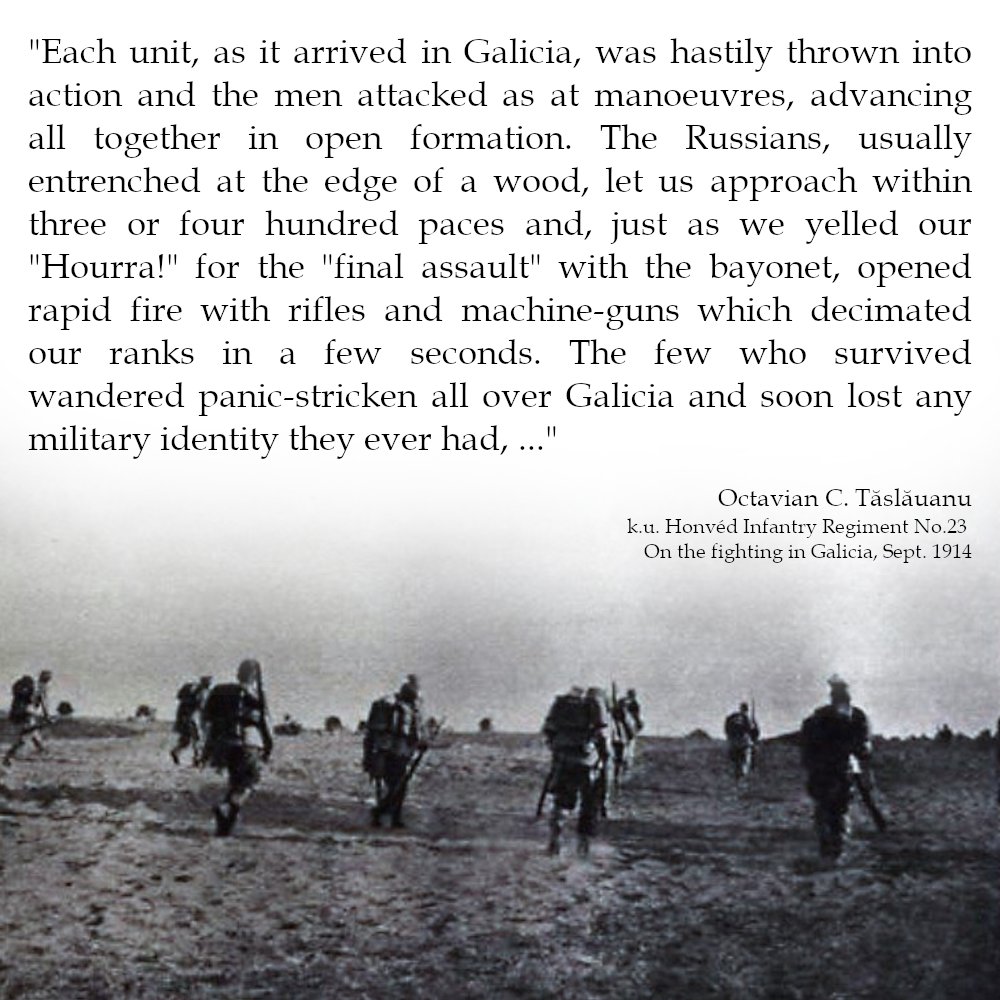
  Watson’s book is full of this sort of account, and they still haunt me a month later.

Sitting on my games shelf is this mini-monster game from GMT Games, designed by Michael Resch.  
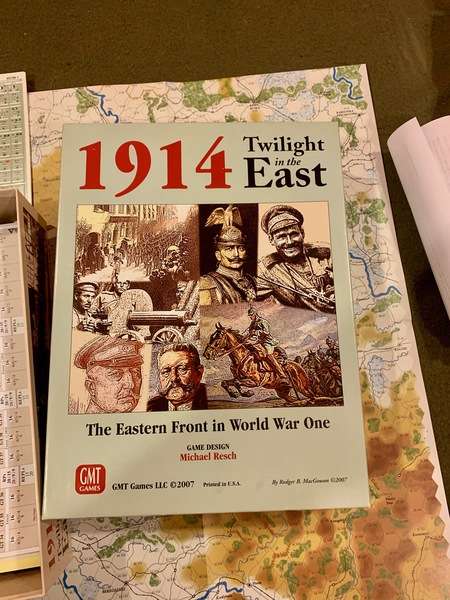
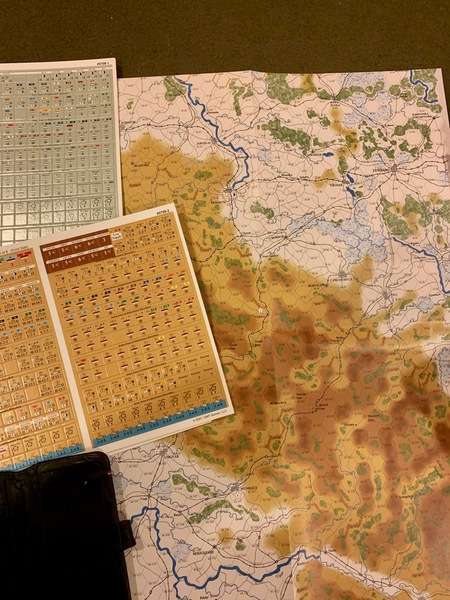
I confess I’ve had it for a few years, unpunched and still in the shrink-wrap, but after reading Watson I had to open it up and have a look.  Here’s the Galicia map, with just some of the counters.
 

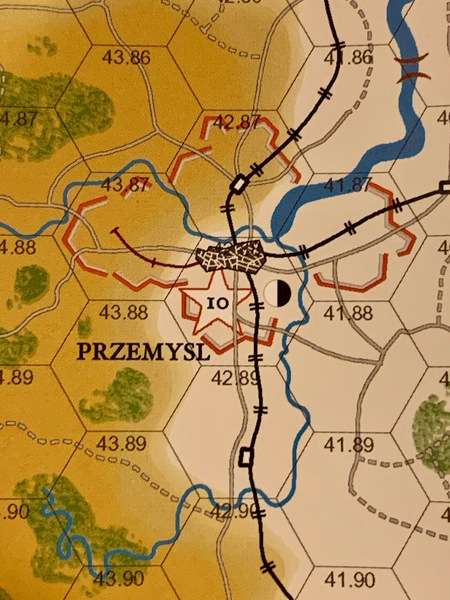
And there’s Przemysl, with its ring of fortresses.
 I may not get to this anytime soon, as I currently have a large Franco-Prussian hex and counter game on the go, but I am very curious to give this a go, as I’ve played Resch’s sister-game on the Western Front, and learned a lot about the difficulty of commanding large armies in that game.  

Even if you never want to add this subject to your gaming repertoire, I can’t recommend Watson’s Fortress enough to you as a superb treatment of an obscure campaign.   Just be prepared to be a little haunted by it.

Blessings to your books,

MP+


Thursday, February 25, 2021

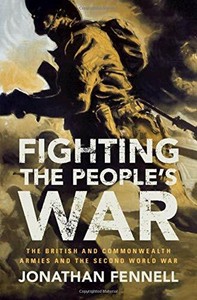
Book Review: Jonathan Fennell's Fighting the People's War: The British and Commonwealth Armies and the Second World War


Jonathan Fennell, Fighting the People’s War: The British and Commonwealth Armies and the Second World War (Cambridge UP, 2019), 932 pages.


Fighting the People’s War (FPW) was not a reading project that I approached from a wargaming point of view, but simply out of a desire to try and stay current with cutting edge military history on WW2.   After reading this massive book, though, I see some of our wargaming preoccupations with morale, troop quality, and national characteristics with new eyes.

Jonathan Fennell is a youngish scholar, who lectures at the Defence Studies Dept. of Kings College, London.  His first publication was Combat and Morale in the North African Campaign; FPW is far more ambitious, with the goal of a single-volume history of the British and Commonwealth Armies of WW2.  Rather than focus on generals, weapons systems, or battles per se, Fennell wants us to understand “the personal concerns of troops, their broad social and political perspectives, and their willingness to fight” (9).   To understand these concerns, Fennell did extensive research on the censorship summaries produced in each formation by officers who censored the troops’ outgoing letters.  These summaries were frequently produced and passed up the chain of command to help senior leaders gauge the moral and effectiveness of their men.

Fennell also focuses on the social composition of the armies that were brought into being after the outset of war.   The British and Commonwealth armies were raised from populations that were “far less fervent and less deferent” than those who supposedly flocked to the colours in 1914.  The British government knew that conscription would be necessary from the outset:  of the three million men raised to join the Army of 700,000 under arms in September 1939, three-quarters were conscripts (63).  The Commonwealth armies were volunteer forces at the start of the war, but there was little “widespread enthusiasm” to join these armies, while minority populations (Canadian French, South African Afrikans) were particularly reluctant to volunteer and even less happy about conscription.   Deferments of professional and skilled workers meant that “semi-skilled and unskilled classes … were particularly represented” in the armies.  

Why did the British and Commonwealth armies perform so poorly from 1939-42, what Fennell calls the “great crisis of the Empire”?  A huge reason was lack of training.  In June 1941, for example, only ten percent of the British Army were fully trained regulars.  There was a shortage of equipment, uniforms, and training areas sufficient for a whole brigade to exercise (221).   The quality of officer training was often poor, and theatre-specific training was often left up to unit COs to implement if they felt like it, so, for example, many of the units defending Malaya were wholly unfamiliar with jungle training.  

Besides the training deficit, there was what Fennell calls an “ideological deficit”.  Governments expected their soldiers to fight the Nazis and preserve the Empire, which required an “innate commitment and fighting ability of its citizens and subects” (255).   The problem was that most troops had little commitment to the British Empire (especially Indian troops), were dissatisfied with their poor pay and treatment compared to the high wages earned by skilled workers in the war industries, and had memories of the poor treatment and unemployment of demobilized soldiers after the Great War.    Generals lamented that their troops were “readier to surrender” than their foes and realized that “many of the troops still want to know what we are fighting for” (255).    After the defeat of Eighth Army at Gazala in 1942, 88 per cent of all casualties were men reporting sick or who had surrendered.   British commanders like Auchinleck asked the government to reinstate the death penalty for cowardice and desertion; these requests were refused.

By 1944, the British and Commonwealth armies had improved training, focused extensively on soldier welfare, and had learned to conserve their dwindling manpower by doctrines such as Montgomery’s set-piece “Colossal Cracks” battles.    Commanders learned to only ask “of their troops what they were capable of and trained to do” (688).   However, hard limits were reached.  The New Zealand troops essentially mutinied over a botched 1943 furlough scheme, the South African populace had largely ceased to support their government’s war effort, and the Canadian government’s attempt to introduce conscription was a military and political failure. 

With victory in sight, what soldiers wanted most was an assurance that things would be better after the war – that better housing, better employment, better education would be a tangible reward for their sacrifice.  Army education schemes to help the soldiers understand what they were fighting for ironically radicalized the troops politically, which explains in part why Churchill, who cared more the survival of the Empire than he did for social engineering projects, lost the 1945 election.   Philip Zec’s famous 1945 cartoon sums up the hope of the soldiers that the peace would finally be an opportunity for the working classes.  One example of this radicalization that I didn’t know of in my own country’s history is that in 1945, Canadian progressive parties won 58% of the civilian vote and a whopping 71% of the votes of soldiers who had recently fought in NW Europe.

Fennell’s book has a demythologizing agenda, to be sure – he wants to debunk the idea that British and Commonwealth soldiers were “stolid … apolitical and uninterested in the broader meaning of the war” (697).   They were brave, they learned, and by the end of the war they were effective and well-trained armies that also “yearned for the camaraderie and equality of the battlefront to be present on their return to civvy street” (697).  

I’m glad I persisted in reading this massive book because it took me a little closer to the mindsets of the troops who did the bulk of the fighting and dying on the ground.   As a Canadian who used to be quite the Anglophile, I always thought that the pluck and elan of the British and Commonwealth troops always got them through a tight scrape – I am sure I’d internalized old propaganda films like The Way Ahead.    In fact, the history of those armies up to 1942 is often a series of lamentable disasters as poorly trained, unmotivated, and poorly led troops learned their business the hard way while the Empire collapsed around them.    For wargaming, even in a small-scale action, Fennell’s book should lead us to question our first assumptions about troop quality, morale and training.  We can ask these questions without questioning the bravery or heroism of these soldiers.

Thursday, March 19, 2015

What Makes A Great Army? Jeffrey Wert on the Army of the Potomac


One of the pleasures of a university library is the odd book that jumps off the shelves.   My campus, Wilfrid Laurier, doesn’t have a great American Civil War collection, but I was pleased to find a book I didn’t know, Jeffry Wert’s study of the Union’s most well known army, The Sword of Lincoln: The Army of the Potomac.  It’s always tempting to think about the great armies of history as having their own particular characters, to judge them as to their resilience, their endurance, and so forth.  Of course these debates can have an artificial character.  For one thing, armies change over time.   Napoleon’s Grand Army of 1805 was not the same army that went to Russia in 1812 or that fought at Waterloo. Likewise, the Whermacht of 1945 was a shadow of its former self   And then there is leadership.  Was the Army of Northern Virginia a great army because of its troops, or because of Lee and his lieutenants, or because for most of its career it went up against the Union’s second stringers?   

Jeffry Wert, a Civil War historian of note, makes a good case that the Army of the Potomac had a distinct character that was found in its soldiers, who did not get the general they deserved until Grant, even if Grant too had his bad days (such as Cold Harbor).  I quite enjoyed this book, and thought his last paragraphs worth quoting.

 The Army of Northern Virginia’s battlefield prowess and victories came against an opponent that at its core - its rank and file - was a great army.   No other Union army opposed such a formidable foe, fought more battles incurred more casualties, and withstood more command turmoil than the Army of the Potomac.  At times, its soldiers despaired of the outcome and cursed their leaders.  But they remained devoted to the cause, despite the fearful losses and inept generalship.  Resiliency became one of their defining characteristics.  They wanted a fair fight with their enemy, convinced that they could whip them every time on such a field.

If the greatness of men can be found in specific places, there was no better place to measure the rank and file of the Army of the Potomac than before the stone wall at Fredericksburg.  It was an insane place, but time and again men went forth - because of orders, because of duty, because of something beyond themselves.   It was a place of greatness.

One of their own gave them a fitting epitaph.   Wriitng in October 1863, Sergeant Charles Bowen of the 12th United States Infantry told his wife:  “If is actually wonderful how the Army of the Potomac stand the deprivations, trials, & reverses that have been heaped on them without stint or mercy to meet the foe with undaunted spirits.  I do not believe there ever was an army in any country that would endure the same treatment this army has & yet be ready to fight as good a battle, & perhaps a better one than they could when they first came out.  Although we have been  deprived of the privilege of winning any lasting victories, it has not been our fault, as history in future days will show. I look forward to the time when a man can say with pride, “I belonged to the Army of the Potomac.  We look to history to give us our just due & to place all the blame where it belongs."

Just as I finished this book, I came found this photo, which was taken around 2000.  I’m not sure that tubby fellow in the foreground, when I was younger and heavier, would have looked typical of a private in the Army of the Potomac, but some of the chaps in the back did a good job of representing the genuine article.


Friday, March 28, 2014

Rethinking the Soviet Union's Great Patriotic War

One of the pleasures of having access to a university library is the new book shelf.   God knows I have enough to read, but I can’t resist checking out the new books from time to time.  Often I learn about books I would never otherwise have heard of.

Boris Sokolov is a Russian author based in Moscow.  He held an academic post at the Russian State Social University until 2008, when he claims he was dismissed for writing an article critical of Russia’s war with Georgia that year.  Other than that, I don’t know anything about him or his qualifications, but he seems to have written a lot.

The Role of the Soviet Union in the Second World War, translated and edited by Stuart Britton (Helion and Company, 2013, ISBN 978-1-908916-55-6), is a set of essays that are sometimes dense and packed with statistics, but which make several points that I didn’t know about.   Wargamers with an interest in the Eastern Front in World War Two might be interested in the four things I learned from this book.

1) Hitler beat Stalin to the punch.  Sokolov is one of several Russian scholars who believe Stalin was planning  a pre-emptive strike against Germany.   As early as May 15 1941 Red Army planners were preparing to “forestall the enemy in deploying and attack the Germany Army when it is in a state of deployment but has not yet been able to organize the front” (21).   At this time Stalin was worried about a possible British collapse, freeing all German forces for an offensive, so in the second half of May called up 800,000 reservists, transferred large formations to the Western Districts, and was even forming a Polish division for operations in German-occupied Poland.  The idea was that by June the Red Army could mass forces between 20-80 kilometres from the border, deploying aviation to forward airfields, in preparation for an attack most likely on Sunday, 6 July.   These plans ignored the fact that the Soviet military was not ready for war.  There was not enough fuel for air and ground operations, and tank and air crews had only a fraction of the training time they needed.   There is a fascinating “what-if” scenario here, if the Soviets would have landed the first punch and not been forestalled by Barbarossa in June.  I rather doubt it would have gone well for them, and might even have been a worse result than what actually happened.

2) Kursk was far more costly than the Soviets admitted.  While still a victory for them, the Soviets exaggerated German casualties “several times over” while concealing their own “disastrous” losses.  The numbers in this chapter are quite confusing, but I gather from Sokolov’s argument that the Red Army lost 1,677,000 killed, wounded and captured in the whole battle, whereas Wehrmacht casualties were most likely 360,000, a ration of 4 to 1.  Soviet tank losses were a little over 6,000, about 4 times the figure for German tank losses (1,500) in traditional Soviet accounts, another 4-1 ration.   “This very unfavourable ration of losses may be explained by the superiority of the new Gemran tanks and also the superiority of German command and control in armour combat. … Another cause was the comparatively low level of training of Soviet personnel, especially of tank-driver mechanics, who until the end of 1942 received only from 5-10 hours of driving practice, when the necessary minimum was 25 hours (43)."

3) Lend Lease saved the USSR.  An official Soviet history of the Great Patriotic War states that assistance from the Allies “was in no way meaningful and could have had no decisive influence on the course of the GPW” (48), when in fact in 1963 Zhukov himself was heard to admit that without this aid “we could not have formed our reserves and could not have continued the war” (49).  Lend-Lease aid included everything from fuel to steel and aluminium to railroad equipment and explosives for making munitions.   Just one of many statistics in this chapter.  From July 41 to Dec 43 the Soviets made 30,000 T-34 tanks, each of which required 20 tons of armoured steel, far more than the USSR could produce.  If Sokolov is right, almost half of those T34s were made with Lend-Lease armour.

4) World War Two was a massive human catastrophe for the USSR.  Hard data on Soviet military losses is very hard to come by, and trustworthy research was not started unit the late 1980s.   In reviewing this research, Sokolov puts total Soviet dead at almost 43.5 million, compared to just under 6 million Germans.  These figures include military and civilian deaths, as well as potential losses from falling birth rates, which may seem to some as an exaggeration.  Even removing the unborn from the equation, the totals are sobering:  26,548,000 Soviet military dead vs 3,950,000 German military dead, and 16,900,000 Soviet civilians dead vs 2,000,000 German civilians dead  These figures are approximations.  Very few casualty estimates were published in the Soviet era and exact figures are hard to come by because for the first year of the war, many Soviet soldiers were not given identity cards, service or pay books, just (if they were lucky) uniforms and weapons (67).   These high casualties and the massive turnover of personnel in Soviet units as losses were replaced by meant that right up until the end of the war, those who were newly mobilized entered battle poorly trained in military matters” (75), and thus “The Red Army had to pay in blood for industrial backwardness and the inability to use combat equipment intelligently” (91), compounded by the Soviet leadership’s indifference to casualties.

Some thoughts for war gamers.

The Ostfront is always a compelling subject for war gamers, and yet it is one of the bleakest and most tragic spectacles of military history.  This book just makes it all the sadder.  I have to take Sokolov’s figures with a grain of salt, since I haven’t seen any scholarly reviews of this book in academic literature and for all I know the man is a bit of a flake.  However, assuming he is near the truth, what does this mean for war gamers?  I would say that any rules set which doesn’t handicap the Soviets in leadership and tactics doesn’t reflect history.   I know this has long been a debate in wargaming as to whether the Germans are too often portrayed as supermen, and I think those questions are fair.  Certainly by 1943 on the Wehrmacht was being ground down and losing its edge, but I think in almost every case until the end of the war the Germans should have an edge in training, tactics and leadership, a qualitative superiority vs the Soviet quantitative superiority.   

I got to thinking as I read this book, will we see more of this kind of scholarship coming from Putin-era Russia?   A lot of the evidence and scholarship Sokolov cites comes from the late 1980s on, the era of glasnost and post-Soviet opening up of the archives.  It worries me that if Russia goes further down the path of nationalism and chauvinism, we will see a new clampdown on scholars who want to mine the archives for a story that still hasn’t been properly told.

Thursday, January 9, 2014

Moral Courage On The Water: James McPherson On Union Naval Leadership

 “Damn the torpedoes!"

Followers of this blog will know that I have an interest in the American Civil War, particularly the naval bits.

I was delighted to learn today that one of my favourite ACW historians, James McPherson, recently published a book on the naval side of ACW, War on the Waters: The Union and Confederate Navies, 1861-1865 (UNC Press, 2012).   That was news to me.  If you are super-interested in this topic, Prof. McPherson has some comments on the book and on the period on YouTube here.  One of his main points is that the US Navy was far better prepared for the war than the US Army was in 1861, and because of its greater professionalism, was more efficient than the army.   It’s also interesting that the majority of the USN were from the North or were recent immigrants, and so the Navy didn’t split along north/south lines to the same extent than the army did.  Southerners in the Navy, like Virginia’s Farragut, remained in US service and didn’t experience the same prejudice that southern US soldiers like Thomas did.  

McPherson is a big fan of Farragut, who he says showed the same degree of “moral courage” in leadership at sea that Grant did on land.  “Citing Farragut’s decision to press forward at Mobile Bay after his lead ship Tecumseh struck a mine and sank, while Brooklyn, second in formation, veered off course and stopped.  It was at this point that Farragut could have said “Damn the torpedoes!”.  He added that Mobile Bay was the first unequivocal Union victory of 1864, followed by Maj. Gen. William T. Sherman’s takeover of Atlanta and Brig. Gen. Philip Sheridan’s burning of Virginia’s Shenandoah Valley.  McPherson stated that these three victories secured Lincoln’s re-election and the Union’s determination to win the war."

 There’s a brief summary of a talk on this subject given by McPherson to the Society for Military History here.  Fans of the naval side of the ACW should also want to know about this blog, The Civil War Naval Sesquicentennial - lots of good stuff there.

Wednesday, May 16, 2012

Beginner Napoleonics Reading

Not that I need a new period, really, but Napoleonics were some of the first figures I ever painted (early 1970s Minifigs that my older brother Alex bought for me since my youthful allowance wouldn't cover it), and then in high school SPI's epic and quite beautiful monster boarsgame Qellington's Victory was a passion for some time. There was also a brief foray into GDW's early 1980s System 7 cardboard counter substitute for miniatures.
Lately I've been thinking that 6mm might be the scale for me to try Napoleonics in an affordable and feasible way. But then I realized how little I knew of the period, other than the 1815 Waterloo campaign, so I thought that some basic reading might be in order first.

Last week an intriguing and quite novel bag was left on my front porch.


Aha, I said, that must be my order from Naval and Military Press in the UK, and sure enough it was.


Inside was a copy of Philip Warner's account of the Zeebrugge Raid, which NMP was flogging, appropriately, as its St. George's Day special. No interest in gaming that action, but I remember reading about it in my grandfather's set of Times Illustrated History of the Great War, and remembered Zeebrugge as a desperate and gallant affair (most VCs in a single day since Rorke's Drift) so it seemed like a great piece of summer reading.

The two Nap books are H.C.B. Roger's Napoleon's Army (1974) and Gunther E. Rothenberg's Art of War in the Age of Napoleon (2000). Of the two, I gather that Rothenberg was the professional academic while Rogers was a career soldier turned amateur historian. No matter, I am just looking for some good Napoleonic primers at this point.

Anyone out there have any thoughts on these two books? Any other recommendations on essential Napoleonic reading for the beginner?

- Posted using BlogPress from my iPhone

Blog Archive

Followers