Tuesday, April 10, 2012

Guild Flak Build

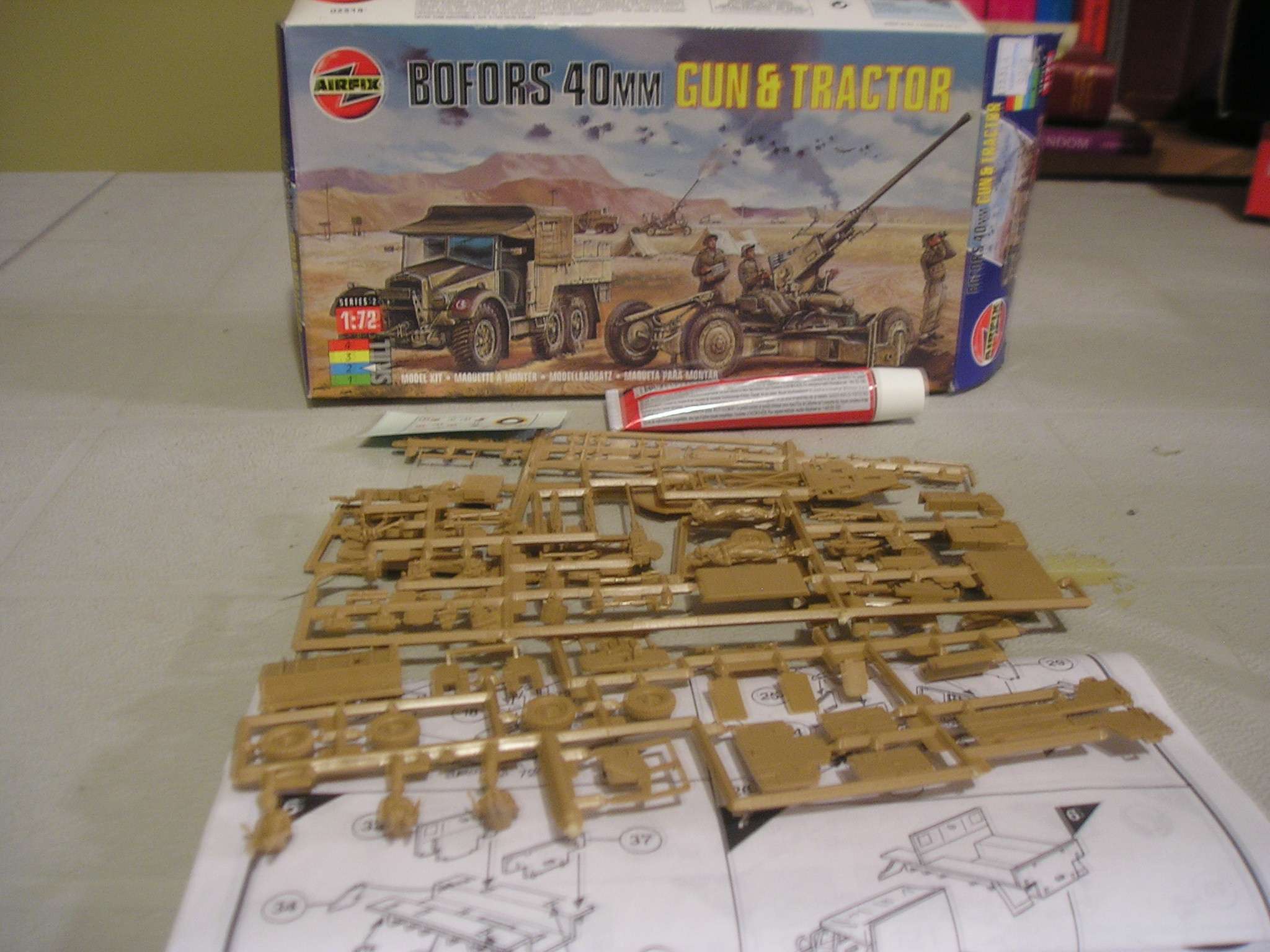
Back in February I posted here that I had discovered an old Airfix kit that I intended to complete and enter in the Flak Build competition on the Guild Wargamers site. Thomas the Mad Penguin, who follows this blog, also submitted a cracking entry to the Guild Build.

I am happy to report that this:


has become this:


It's been over a year since I tackled a plastic model kit. After reacquainting myself with that particular joy, I can see why people spend good money on resin kits. Not that trying to cut tiny bits of plastic, badly moulded in China, and assembling them with strings of plastic glue going everywhere like Shelob's web isn't brilliant fun, mind you, but it's less and less my cup of tea.


I wasn't intending to assemble the model in the limbered position. I was watching something on telly while cutting and gluing, and that is always dangerous.


I kind of ran amok with the rust, thanks to a Tamiya weathering kit. I've been walking around the base all week, studying rust patterns on vehicles.


The Allied air recognition star and the 3rd Canadian Div markings are from Dom's Decals. They are intended for 15mm models but they work ok for 20mm, methinks. The piece of stowage on the back of the vehicle is from a RAFM pack of 20mm boxes and stowage items I snagged at Hot Lead last month.

The two crew figures are from AB Figures - first rate stuff. I had them in my bits box and wanted to give the model an extra touch. As someone on the Guild kindly commented, the model has the look of troops waiting for the order for a convoy to resume. The faces in this photo are too dark for my liking. I am working on a three colour face painting process using a lot of glazing, and I hadn't managed the lightest shade yet when this was taken.


The face on the standing guy, seen on the right, is a little better here, after the last coat. Could use some eyes, methinks.


I know I haven't got a chance in heck of making the top four of forty plus entries in the Guild Build and I'm fine with that. It's very stiff competition and I find this sort of thing useful as a way to challenge my painting game and see if I can find ways of improving, and that's what it's all about, really.

Now, what will I do with this model, now that I've made it???

Friday, April 6, 2012

What Really Happened at 1st Manassas


Someone sent me this a week ago, and it still cracks me up. You may have to google Leroy Jenkins to get the full joke, but I warrant you'll enjoy that too. Every wargamer knows a Leroy Jenkins.

Saturday, March 31, 2012

Boardgame Night: War of 1812

One of the fellows at the local boardgames club brought something new this week, The War of 1812: Invasion of Canada by Academy Games.


I had seen mention of this, including a brief demo video, via the ConsimL twitter feed some time back and had thought, "wow, that looks cool." It is cool. 1812 is a little more complicated than the classic block game by Columbia, but similarly fun and playable. The map ranges from Detroit in the west to Montreal in the east and is divided into areas which can be contest by up to five players on two sides.


There are two types of Americans: Regulars and Militia, and three types of British: Regulars, Canadian Militia, and Indians. Each of these five types gets its own move during a turn, but in random order. Movement is card driven, and a few special cards allow movement options such as lake movement, allowing you to land forces behind enemy lines. Other cards confer special advantages in combat. Each side has several movement cards which are also called treaty cards, and when three treaty cards in a row are played by either side, the game ends. While the US players have better cards, the British player gets to move more often in a turn.

Combat is by a clever system of bespoke dice which generates several results: Kill, Run Away, and Decision (you get to stay and fight or move to a friendly or uncontrolled adjacent area). The distribution of these results varies by troop type. British regulars almost always kill their opponents and never run away, US regulars are almost as good but can sometimes run away, Canadian and US militia run away a lot, and Indians can kill and get a lot of Decision results, which means that you can use a battle to scatter them, guerilla like, in the areas adjacent to that battle. This technique is really annoying for the US.

The cards are have some really fine artwork, the production values are high, and the game mechanics are interesting and clever. The randomized sequence of the play would give some good solitaire replayability, while playing it in teams of 3 vs 2, as we did Thursday night, is a lot of fun as well.

War of 1812: Invasion of Canada gets the Mad Padre Blessing and is highly recommended. The only down side, for me, is that it has now planted a seed in my brain, that a few 28mm miniatures for War of 1812 skirmish gaming might be a lot of fun. Sharpe Practice would be the perfect set of rules. Agghhh! Stop thinking that! Noooo!

Tuesday, March 27, 2012

My Weekend At Hot Lead 2: Victorians On Venus

Don't read this post if you are offended by silly and lighthearted wargaming. If however you enjoy this sort of thing, pray read on.

One of the traditions with Hot Lead is the Sunday morning Victorian SF Bring and Battle. This game features players throwing their favourite Colonial troops into battle, augmenting them with whatever steampunk clanks and contraptions they can think up and scratchbuild or convert. It's also a game that sees adults and children, often parents and their kids, happily play side by side, which is quite a wonderful thing.

Here you can see the mix of adults and kids at the huge table, with their forces on the start lines.


On the bottom left of the picture is Paul (Pablito) Remisch in the red shirt, with his wonderful son Will, who anchored my left flank. Will was a most helpful and reliable ally to have.

So as explained by our GM, Richard (Rico) Brayton, we were all on Venus, a planet which is the subject of the latest rush to grab bits of empire by the colonial powers and their armies of human and alien sepoys. Apparently Venus is hot and dusty and inhospitable, but has certain rare elements that are quite coveted on earth and abroad, apparently, as aliens from beyond the solar system, suspiciously similar to HG Wells' Martians, had also shown up to mine some of those valuable elements.


"The chances of anything coming from Mars, are a million to one, he said.
The chances of anything coming from Mars, are a million to one,
But still, they come."

(Bonus points if you remember Jeff Wayne's War of the Worlds, extra bonus points if you remember who the narrator was).

The owner of these nice tripods explained to me that they are entirely made from things purchased at a dollar store, less the tentacles on one, which he found at Historicon.

Since I had flown to Hot Lead and didn't bring any figures, James Manto kindly leant me some of his gorgeous late Colonial British and Native troops, including these beautifully painted Highlanders. Someone else kindly kitted me out with the large black steam locomotive tank, and the little walker chap at top left.


I was also given a rocket dirigible, HMS Billious, seen here doing some last minute recce while the field gun deploys ready for action front.


General "Stonky" Smythe-Dishrag surveys the approaching foe, the Imperial Dutch Colonial Army, consisting of rocket troops, alien Krootish mouted rifles on giant Saurian thingies (some really nice conversion work by my opponent Dave), a giant blue behemoth of a tank, and some more mounted troops riding mechanical dragonflies (more brilliant conversions). Oh, and for some reason, the legendary vampire hunter, Baron Van Helsing, was also present with the Dutch, having sniffed out vampire activity in the British colony, a most dreadful slur on her Majesty's subjects in space. Note the bagpipe player riding on the deck of the tank. That explains why its crew is buttoned up, no doubt!


Once things got going it was quite impossible for me to observe everything else that happened on the far end of the table. There were a lot of Arab types among our opponents, and a vast horde of them tangled with the aliens, damaging a tripod, killing some dismounts, and generating vast numbers of martyrs from the alien heat rays.

Here some more Arabs charge the US contingent:


Japanese infantry, US allies in this battle, advance, while an airship thingie (Japanese as well, I think) covers them from above:


Venus proved to be a confounded dangerous place, with various critters appearing at random. Here Imperial German machine gun troops try to stop an advancing giant scorpion:


While their infantry colleagues are ambushed and a few eaten by raptor-like creatures looking suspiciously Holstein in colouration:


On my front, I unlimbered my artillery and halted by steam tank to shoot up the mechanical dragon fly rider guys as they came at me. I got a few, and the survivors closed in on HMS Billious in an attempt to bring her down:


Lt. Archibald Smedley climbs out on the wing of the Billious, armed with his trusty Webley service pistol, and fights off the flying Dutchmen. He would be awarded the Distinguished Service Order for this feat, thanks in small part to his engagement to Miss. Fiona Crumblethwaite-Brookhamster, niece of Lady Smythe-Dishrag. The flying Dutchmen were destroyed in this fight, while Billious survived and continued the fight.


Meanwhile, on my left, young Will sent Her Majesty's aircar Chitty Chitty BoomBoom in to bomb and strafe the Dutch Saurian Mounted Dudes, checking their advance but nearly being shot down in the process:


For my part, while my Highlanders suffered grievously at the river when ambushed by the Dutch rocket troops, who cam over a small hill, rocket packs and guns blazing, the Dutch were in their turn wiped out in a charge of my 21st Lancers, sadly not pictured here, winning their commander a Mention in Dispatches. After four hours of play, when we finally came to a halt, it was agreed that the Dutch Alliance had lost its grip on Venus, and that Perfidious Albion would be dominant, especially as its allies, the US and Japan, had been bled white in the battle.

Now, if only we can grow a decent strain of tea here, this could be a decent place for a plantation, what?

My Weekend At Hot Lead Part 1

For the last fifteen years, gamers across Ontario and sometimes from over the border make a late March pilgrimage to Stratford for Hot Lead, one of the best miniature wargames events in Canada. More often than not I've been either busy preparing for Easter in the parish, or since joining the army, being too busy or too far away or both. However, this year I had some time, a WestJet seat sale, and Mrs. Padre busy and urging me to play with my friends, so off I went. Last Thursday I drove from Medicine Hat to Calgary in a snowstorm, and landed in Kitchener, ON in summer weather of 26 degrees C. My mate James Manto, the evil genius behind Hot Lead, met me there along with his lovely wife Elizabeth, and took me to their house, where they kindly put me up for the weekend.

Having solved the problem of getting to Stratford, I now faced the problem of what games to play in over the three days. My cunning plan of volunteering to fill out the sign sheets for each game on Thursday left James with one less job to do, and me to put my name wherever I wanted. So I was guaranteed a seat in the games of my choice, I just had to choose. Hnmmm.

For Friday night I decided to play in a 1/1200 scale naval game hosted by Ian Tetlow, a talented painter and games master who teaches botany at the U of Guelph when not gaming. Ian's game was based on the WW1 1915 battle of Dogger Bank, when Hipper's battlecruisers blundered into Beatty's.

Ian had a lovely map from (I think), Seascape:


A closeup of some of Ian's models: I believe these are the Seydlitz and Derfflinger:


The rules we used were Victory at Sea: Age of Dreadnoughts by Mongoose. They seemed fairly simple and playable.

I volunteered to take the light stuff, three German destroyers and a light cruiser, the Magedburg. I liked the idea of being a dashing destroyer captain, standing on my flying bridge, silk scarf streaming in the wind, leading my greyhounds into torpedo range. After a few turns of screening the heavies, I got my chance and was pointed at the British line.

Here are my three DDs charging at the British monsters:


Unfortunately it didn't go as planned. My ligh cruiser and two DDs were smashed to scrap and sunk before they got within torpedo range. The third DD turned away, escaped while the British were pounding the German heavy ships, and then came around for another try now that one of Beatty's battlecruisers had fallen out of line. The British DDs had tried the same maneuvre, rather more successfully, and the sole surviving British tin can, half sinking, got a lucky shot in, crippling my speed and allowing the secondaries on my target to finish me off.

This experience left me reconsidering the wisdom of playing in a naval game at a convention, given that in a land battle, regiments don't usually blow up and sink so quickly.

Saturday morning saw me in another kind of battle, helping the hardpressed convention staff run the Bring and Buy booth. Well, I had to earn the coveted Hot Lead staff red shirt somehow. By 09:30 we had an impressive pile of minis, terrain, and books of all kinds and qualities, and a solid press of gamers piled up three and four deep waiting for our 09:30 open. The next hour was totally frenzied, but by 10:30 the crush had abated and I had time to wander about and look at some games.

I may not have this right, but I believe this was the Battle of Lake Erie, one of the many War of 1812 games offered at Hot Lead. Nice ships.


One of several Vietnam games on offer:


A very fine Lord of the Rings game, with orcs trying to take Osgiliath from the men of Gondor. I got the impression that both sides had ginormous off board catapults that occasionally fired and did horrific things to anyone underneath them.


Ian Tetlow and friends' Saturday Napoleonic game, a massive 28mm recreation of the 1813 battle of Bautzen. This game was massive, and ran for most of the day.


An example of the very high standard of the figures in the Bautzen game:


By Saturday afternoon I was done with Bring and Buy and had chosen a WW2 game, "Fallschmirjager vs the Ripperton Home Guard", a SeaLion game in 28mm by Chris Mallet. I've always been a sucker for SeaLion games. Chris was using Battlefront rules.

A view of the peaceful village of Ripperton, showing some of the lovely buildings in Chris' collection. The British had a FOO somewhere in the two larger buildings and the FJ were tasked with going in and winkling him out so a nearby airfield could be used to bring in reinforcements.


The Germans attack in company strength.


There were a few nasty surprises, including a booby trapped bridge that put paid to our hasty assault with motorbikes, a home made device throwing molotov cocktails at us, and lots of barbed wire on the far side of the stream. However, by the end of play we had decent strength in the village and our training was proving superior to the Home Guard, but the British still held the big buildings. While we all had fun, I confess that I didn't fund the Battlefront rules to my taste.

n Saturday evening I decided to overcome my qualms about naval gaming and stuck with my choice to play in Glen Broome's American Civil War game, the 1862 Battle of Memphis. The Confederate fleet was a motley collection of underarmed and unarmoured paddlewheelers, but they were fast and they had rams. Here are some of Glen's beautiful 1/600th scale ships, the CS fleet ready to go.


The US fleet in contrast had fewer ships, better armed and armoured, but quite slow. The result was pretty awful for the Union, ending rather like the sea battle in Ben Hur ended for Jack Hawkin's character, with most of the Union players dogpaddling in the muddy Mississippi.

It wasn't a great result for the Union, but it gave me a feel for the rules Glenn was using, Sail and Steam Navies, and gave me some ideas for my own ACW campaign, where I have a riverine component and have just bought some Thoroughbred models of CS and US ships. Lots of food for thought.

Other battles running Saturday night included an awesome looking WW2 air battle over North Africa, hosted by my friend Keith Burnett, a wonderful game master, using Check Your Six rules and 1/300th scale German, Italian and British planes.


Another air game running Saturday night, a WW1 game with a balloon busting theme.


Gary Schofield ran this beautiful looking 28mm game, featuring a hypothetical invasion of Nova Scotia during the American War of Independence.


Among the other games I noticed in between turns in my ACW game was this amazing chariot racing game, set in the Circus Maximus. More shades of Ben Hur. A lovely terrain piece, thoughit may be picky to ask why the numbers on the racecourse were not in Roman numerals. Still a beautiful game.


There were more games than this at Hot Lead, and you can see more of them at my friend James Manto's blog. Overall it was a good go. The quality of games and their presentation was generally high, the convention is small enough that it is an intimate and friendly experience, the venue is first class and the volunteers running it all are good people. I recommend it.

In my next post, a report on the wild and wacky Sunday morning Victorian SF bring and battle game.
I Got Blitzed

Three 15mm resin Opel Blitz German lorries from Gaming Models which I finished just before leaving for Hot Lead. Reasonably priced, fairly well detailed. My only complaint is that the resin had a lot of pitting in the canvas covering the top the back of the truck, but it doesn't show at a reasonable distance. I would buy more of their stuff. These three models will give my Normandy Germans some lift for a battery of 105s that I need to finish shortly.


I totally stole some weathering ideas from some work on the Guild WarGamers forum and tried some techniques with pitting and rust patches. For the rust I tried both a Tamiya weathering kit and then watered down GW Scorched Brown. Both techniques worked reasonably well. I also slathered some globs of brown latex FolkArt brown paint into the wheelwells to look like accumulated mud.


Saturday, March 17, 2012

ACW Campaign Update - From the Bluffsburg Mercury, 24 June

The Bluffsburg Mercury

Editor's Note: Ms. Katty O'Kay, a well-known belle of the town, a most respected, charitable, and chaste young lady of good family, and possessed of the finest education that New Orleans could bestow upon her, has agreed to employ her pen for the benefit of our readers desirous of intelligence as to the state of emergency in the county. In the absence of our male correspondents, who have been called to the colors, Ms. O'Kay will serve our readers with the most reliable and useful information that may be gleaned in this difficult times.


Bluffsburg, 24 June, 1862

Whereas a week ago today our town of Bluffsburg was thronged with crowds and marching soldiers, and resounded with stirring martial airs, today by contrast Bluffsburg is almost desolate. That day a week ago, General Theophilus Hatcher led his command north to face the Yankee invaders.

I do not believe that there was a soul amongst us not deeply touched by those men who came to Bluffsburg County to be our defenders, especially with our own men serving across the river near Corinth, and hardly one man of fighting age remaining. From the southern part of our Magnolia State came the four regiments of Colonel Archibald (Archie to his friends, he hastened to tell me) Gibson, a hardy and experienced soldier. Col. Gibson's men hale from the pine forests of the Gulf Coast region, which explains their nickname of the "Old Pine Tar Brigade". As one sergeant told me, "We are fixing to stick to our ground like pine tar, and not go anywhere."

Proceeding Gibson's brigade some days prior was of course the brigade of Col. Roger Ewing Bates, a mixture of soldiers from Arkansas, Louisiana, and far away Texas, all grim and experienced fighters. They were ferried across the Mississippi early one morning, and I have had no knowledge of their whereabouts since. One thing is sure, between Colonels Gibson and Bates, both banks of the Mississippi will be stoutly held against the Yankee.

Who present a week ago will forget the cavalacade that led the way north out of Bluffsburg, the dashing cavalry of Col. Romney Wagner? This proud chevalier leads men from Texas, Georgia, and our own Magnolia State, the 19th Light Horse from the border country near Tennessee where boys learn to ride early on. Accompanying them was a trim battery of flying artillery, under the young and dashing Captain Collver.

Of Colonel Hatcher, all present felt the greatest admiration for his sacrifice. Several months after he was wounded at Shilo, he still wears his arm in a sling, and the pain of his wound is written clearly on his face. Nevertheless, this brave and veteran commander is determined to take the fight to the enemey. As he told the Mercury, Jefferson City may have been taken by surprise, but he is determined that he will meet and defeat the enemy before they can take Bluffsburg.

There is no citizen, I am sure, who will disagree that Bluffsburg is the key to the upper Mississippi. With our commanding position on the hills above the river, our town is the only bastion north of the larger city of Vicksburg. Indeed, as General Hatcher told me, if he can hold Bluffsburg, then he holds the key to the locked door of Vicksburg in his pocket, and the Yankees will be unable to connect with their tyranous forces oppressing New Orleans.

Now, a week later, the town is quiet and apprehensive. General Hatcher and his troops have moved north, and all know that Yankee troops have been massing in Jefferson City this past month. We must put our faith in southern arms and chivalry now. However, Bluffsburg still has defenders. A stout battery guards the heights above the river, and down at the docks, two mighty warships make their final preparations.

Today I visited Captain Seamus O'Donnell and his command, the ironclad Joshua and the river gunboat Maccabbee. These two warships are making final preparations to get underway, and will steam upriver to reinforce the fort at Island No 6, which readers will know from before more peaceful points as a key link between the banks of the Mississippi. Captain O'Donnell, a native of County Cork and a former sailor in the Royal Navy, gave me a tour of his flagship the Joshua, and it is indeed a worthy tribute to its namesake, the mighty warrior of the Lord from Scripture. With its decks wrapped in iron rails, stout beams of timber, and terrifying cannon hidden within its casemate, the Joshua will surely guard the river against anything the Yankees may devise.

And so, gentle reader, we await what fate and the Northern invader can do, trusting in God, in our brave soldiers and sailors, and in the resolve of our citizens. May Bluffsburg remain, in these dark times, a shining city upon a hill, a beacon to the free peoples of the South!

Blog Archive

Followers