Showing posts with label Wargaming Theory. Show all posts

Wednesday, September 26, 2018

Manoeuvre, Psychology, and the War-game


On Twitter today, Nick (@Dozibugger)of the Too Fat Lardies crew flagged this short piece on a British Army professional development website by Dermot Rooney.

The gist of the article is that the pendulum in debates about infantry doctrine swings between Attrition and Manoeuvre.   Attrition is relatively easy to model in simulations because it can be matched to the known lethality effects of weapons systems (eg blast radius) whereas manoeuvre is harder to model because it depends on psychological factors (surrendering when you know you are outflanked and beaten). In other words, you can defeat the enemy at the tactical level through Attrition, as summarized in the saying “close with and destroy”, or by “manoeuvre and cleverness”.

  Attrition can seem more understandable because you can use numbers and models to analyze and predict the expected results of weapons systems, whereas Manoeuvre is a subtle art and hard to quantify.   Also, Attrition may seem more attractive to planners and accountants because the cost of a weapons system can be justified by its predicted effectiveness, whereas Manoeuvre is an expensive proposition that requires extensive combined arms training in the field, and its expected results are hard to model, because at its core Manoeuvre is about psychology:

“Manoeuvrism hinges on two psychological tricks: 1. Give the enemy more things to think about than he can handle; 2. Make it obvious that he’s going to lose."

Rooney notes that Manoeuvre on the battlefield is typically a low-level activity.  At the operational level, there may not be advantages of terrain or surprise that allow a general and his staff to be very clever.  Rooney quotes the British general Horrocks, who said of Operation Veritable (1945) that “There was no room for manoeuvre and no scope for cleverness”, but once the operation was under way, there were opportunities for his tactical leaders to get into positions where they could persuade enemy soldiers that they were beaten.


Surely this is true of the wargames table.    It seems to me that the more units we put on the table, the more we move the pendulum towards Attrition.   I am thinking of an AAR I saw recently for a Team Yankee game, where the table was packed with models and there was little opportunity for the attacker to do anything but trust in firepower to plow through.   Likewise the big battles so beloved of us gamers, whether Waterloo or a 2500 point per side W40K game, surely are resolved by Attrition.    
In such games, a player will not be willing to concede defeat until the math works remorselessly in the opponent’s favour.   We can model psychology in rules such as “Army Break Points” but those rules are only triggered by a sufficient amount of Attrition.   


So what would a game look like if it was set up more at the Manoeuvre end of the pendulum?   It would presumably have fewer units, and a table that allowed more movement and less sheer brute force frontal battering.  It would also model the effects of combined fires, including the loss of initiative, command and control, and morale under the effects of those fires.

Of course, there are all sorts of mechanisms out there already which try to include these factors, including rules for troop quality types, the cumulative effects of shock, and the gradual loss of command and control as leaders are lost.  None of this is new.   Rules systems like WRG have modelled the effects of being flanked on morale checks forever.

In his article, Rooney says that “Sometimes there’s a cellar of scared men waiting to put their hands up; sometimes there’s a fight right up until the last few metres and then a Mexican wave of surrendering happens”.  I guess that’s really the challenge for tactical wargamers - at what point does that seemingly impregnable unit, dug in with hard cover, suddenly become those scared men waiting to put their hands up?   And, more mysteriously, at what point does my opponent across the table start to lose heart as the battle turns against him/her?


Surrendered British paras at Anhem.  What makes the best troops decide that they’re done?

I don’t have all the answers to this, but for years now I have used this quote at the end of my work email signature block, from B.H. Liddell Hart: “Loss of hope, rather than loss of life, is the factor that really decides was, battles, and even the smallest combats”.
Blessings to your die rolls.
MP+


Monday, April 3, 2017

Wargaming With The Big Boys And Girls


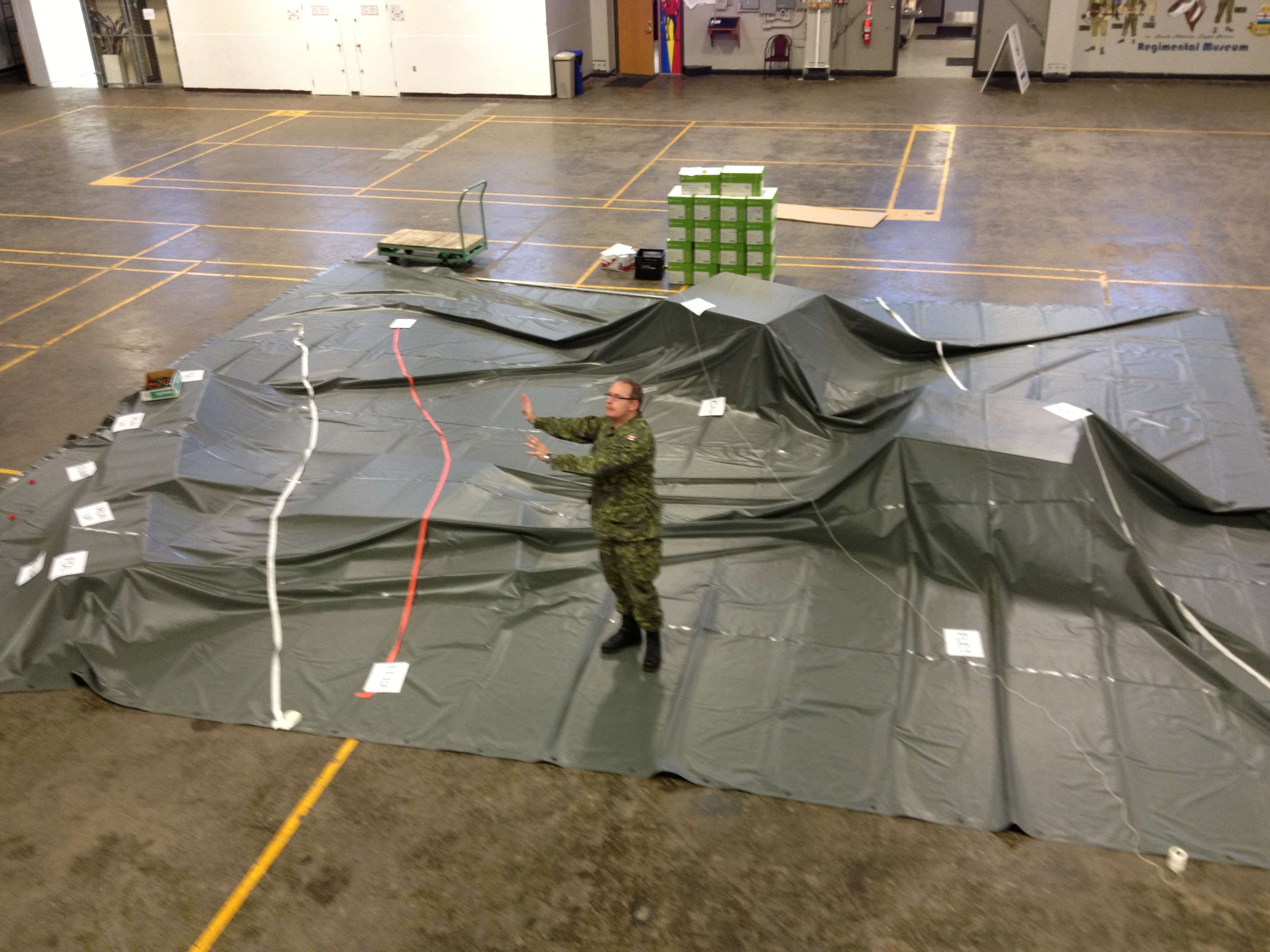
Sometimes this image, from a recent Canada/US military exercise, is how I would like to wargame, stomping around on a big map in my combat boots, pointing at things, with player aids and counters carefully prepared by dutiful underlings.  

This last week on The Strategy Bridge, an online journal for military, government and think-tank types, there has been a good discussion on wargaming from a professional perspective.

Of course, for some of us, wargaming is a subset of military history that looks backwards rather than forwards.  We focus on past conflicts, and ask ourselves if the games are faithful models of the past (assuming that we can know the past), or, in the words of the old Avalon Hill box titles, if we can do better than Alexander or Rommel did. 

However, for those of us in the hobby that want to look forwards, who are interested in wargaming the near future, we will know that wargaming as a hobby has often intersected with military training.  Mark Herman, for example, was one of a stable of games designers who cut their teeth with Jim Dunnigan and SPI imagining future wars with the USSR and other likely opponents before the fall of the Berlin Wall becalmed SPI and ultimately bankrupted it.  Herman, I think on the Guns, Dice and Butter podcast, talked about how he was picked up by the Pentagon for the work he had done with SPI.  More recently Brian Train and Volko Ruhnke have attracted attention from the military community, who see their contemporary titles as useful training aids.

So, depending on where you are in our hobby, the stuff in the Bridge series may not be earthshaking news, but it is interesting to hear professionals talk about the same issues of simulation, probability and uncertainty that we also think about.

Rex Brynen , asks how wargames can help planners calculate the likely actions of actors who may be unpredictable (think Donald Trump) or who want to be seen as unpredictable (think Nixon vs Vietnam).

Krisjand Rothweiler talks about various types of wargames, including matrix and seminar games, to imagine solutions or strategies to problems such as geopolitical rivalries over territories and resources, or terrorism.

Tom McDermott writes about the importance of capturing the psychology of the opponent in a wargame, in the spirit of Clausewitz's use of the metaphor of a duel with a thinking, feeling opponent rather than a dispassionate, predictable adversary.

Mark Jones writes about using wargaming in a predictive manner, assuming that you can get the probabilities write.  He starts with an anecdote about US troops preparing for Desert Storm, using a boardgame by Frank Chadwick's (sadly now defunct) Games Design Workshop to prepare for their war.  Jones notes that predictions of allied casualties for Desert Storm were wildly off, and asks how wargames designers can and should address uncertainty in their models.

Finally, Benjamin Jensen writes about how military leaders since Moltke the Elder have used wargames to learn about their craft and to prepare for the future.  Jensen ends with the promise of a series of games being published online by The Strategy Bridge over the year to come, a project I shall be watching with interest.

Obviously the types of games and the mindsets described in this article may be vastly different than the typical club game  fought in a few hours, where Vikings and Saxons, or Tigers and T34s, are pitted against each other in a purely tactical context.  However, if I could go to a weekend event where there was a game, perhaps lasting half a day or a day, run according to some of the principles described in these articles, for example, any of the matrix games described here on the Paxsims website,  I would be all over that.

Blessings to your imaginings!

MP+


Friday, April 1, 2016

Imagining Wars To Come: Science Fiction, the Military, and the Wargamer


State of the art science fiction - future tank from Alexander Korda's Things to Come (1936)
 
 
As a wargamer, I'm not drawn much to SF (unless one counts a handful of W40K figures left over from my son's adolescence).   I tried WW3 based microarmour when I was an undergraduate, but it all seemed very deadly and rather tedious to me.   I do enjoy listening to other gamers imagine future conflicts - there was a very good thread on the Too Fat Lardies email list some months back with some very good commentary. I respect people like Robert Avery, whose undersung Quadrant 13 rules seem like an honest attempt to look far into the future using a simple gradient of tech levels.  However  I suspect there's a far future event horizon beyond which we simply can't imagine what war would be like, since we have no way of really envisioning future technologies, human or alien,
 
As a soldier, however, I take great comfort in knowing that my peers in the areas of strategy, doctrine, research and development spend a of time imagining what war in the near future will look like, even given our well-known predilection for imaging that the next war will look like the last war..   A book I reviewed recently on my other blog outines US military research in broad strokes, and includes an interesting piece on how the Pentagon is not adverse to picking the brains of science fiction writers.
 
There's an interesting collection of SF short stories available free here.  A US military think tank, the Atlantic Council Future Warfare Project, pulled together a number of smart writers and published their work online in a collection called War Stories From the Future. The collection includes a forward by General Martin Dempsey, who was te 18th Chairman of the US Joint Chiefs of Staff, which tells you that this was not seen as a flake project.  Some of the contributors are well known SF writers like David Brin, and others are young newcomers. 
 
You won't find aliens or ray guns in this collection.  Instead, you'll see how much netcentric command and control systems, the computer and satellite systems by which today's miltaries are controlled, concern commanders as advantages and laibilities from kinetic attack in orbit or cyber attack on the ground.    Of my two favourites, one is "A Stopped Clock" (Madeline Ashby), which envisions a modern Asian city being shut down by cyber attack, and it's citizens trying to cope - it's a modern update of E.M. Forster's "The Machine Stops".  My other favourite is Linda Nagata's "Codename Delphi", in which a small unit of US troops in armoured exoskeletons operating in an asymetric environment are still vulnerable and dependent on a  remotely-located civilian battlespace manager giving them real time intelligence and telemetry updates.  
 
Some of the stories are downright tedious and poorly written, but they all have something to say about what war will probably look like at some point in the 21st century.
 
So here's a question.  If you were to design a wargame or rules system for, say, 2060, how might it look different from war today?  Autonomous hunter-killer robots?  Advanced UAVs?  Enhanced human soldiers with neural networks and load-bearing exoskeletons?  Jammers to negate C3 systems?   How would you preserve the importance of the human element (leadership, training, morale, endurance) while modeling disparities in tech levels between combatants^
 
What would your near-future war look like or would you even want to go there?


Wednesday, November 11, 2015

A Bit More On Military Wargaming: Lessons Learned From MC'02


Apropos to my post last week on last week’s post about a disastrous and badly flawed US military war-game, here is another article from the same website, War on the Rocks, by two of the Red Team members in MC’02.  

Point Four is especially interesting.

Friday, November 6, 2015

When Wargames Go Wrong: A Cautionary Tale

“They sunk my damn navy”.

 This is more a post about military theory than about wargaming, but there’s an interesting crossover.  Yesterday I came across the story of Millennium Challenge ’02 (MC ’02) by Micah Zenko, a well-known US defence journalist.

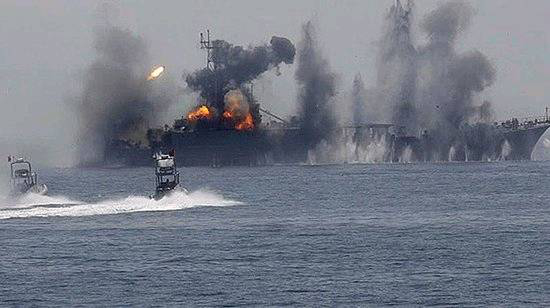
MC ’02 was a major military simulation carried out by the US military in 2002.  The goal was to imagine military conditions in 2007 in a war between the US and Iran.  Iran, or the Red Team, led by a maverick and imaginative general, was given limited resources to defend against Blue Team  -  a US fleet with technology and abilities beyond what was foreseen to come online in 2007.  Using an imaginative and asymmetrical plan, the Red Team essentially destroyed the US force by swarming it with a mosquito fleet.

After an initial shock, the Blue fleet was refloated, the Red Team hobbled, and the exercise was allowed to follow a script that ended up validating US military doctrine.  The fortunate result of MC’02, however, was that it led to more freedom for Red Teams in military wargames and less tolerance for scripted outcomes.

Just out of curiosity, I flipped the link on Zenko’s story to my brother the Mad Colonel, who spent 15 years after retiring from the Army running simulations for military clients in a location that will remain nameless.

 "I can say quite categorically that the friendly side never lost a war game in X.  Ever.  The force ratios were always in favour of the blue side and the control as such that even if it looked like blue might be threatened (which very rarely happened), control would step in to correct the situation.  I only ever had one force-on-force event when the CO of [XYZ Regiment] had his squadron commanders play a capture the flag (hill) scenario. We tried to suggest to the training audience to give the Opfor commander free reign, even with a much weaker force, but it never happened.  I was told very often that having blue get badly beat up would be bad for morale! It did not matter that they walked away with false conclusions of their state of training or their combat effectiveness."

My brother’s anecdote made me wonder about the limitations of wargames and simulations in situations, such as military training, where sometimes there are vested interests to produce certain outcomes.   Perhaps a new doctrine or technology needs to be proven desirable for procurement, or reputations of certain commanders need to be upheld, or morale needs to be protected. Of course there are exceptions, where military exercises allow opposing forces the freedom to seriously challenge and even embarrass the Blue Team.   A good example of this is in Dan Bolger’s 1991 book, Dragons at War: Land Battles in the Desert.  Bolger describes his experience as a US Army company commander, whose unit was sent to the National Training Centre at Fort Irwin in the Mojave Desert.   The NTC was home to a highly specialized OPFOR, trained to simulate a Warsaw Pact mechanized force which often beat the simulated crap out of the units sent for training.  Steve Whitesell, owner of the excellent blog Sound Officer’s Call, tells a great story about getting Bolger, a general by then, to autograph one of his books while they were in Iraq.  

So while not all military simulations were as corrupt, to use Zenko’s word, as MC ‘O2, it’s worth asking what assumptions and desired outcomes are built into these sorts of exercises.  It also leads me to wonder if , sometimes, hobbyists might actually do wargames more honestly than militaries.   Wargamers don’t have careers to protect or enhance.  We don’t have morale to protect, or cherished doctrines or weapons systems that we want to show in the best light.   We’re usually just interested in who comes out on top.  Mind you, our wargames, rules sets and historical research can be  subject to our own pet theories, prejudices and assumptions, but that’s for another post, perhaps.

MP+

Friday, March 28, 2014

Rethinking the Soviet Union's Great Patriotic War

One of the pleasures of having access to a university library is the new book shelf.   God knows I have enough to read, but I can’t resist checking out the new books from time to time.  Often I learn about books I would never otherwise have heard of.

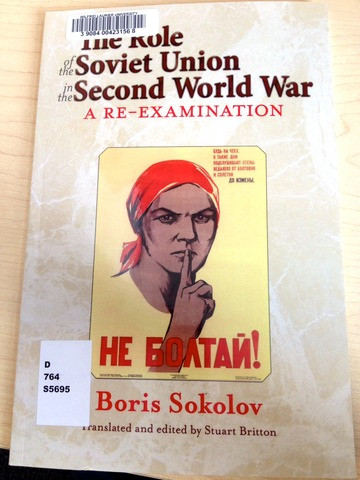
Boris Sokolov is a Russian author based in Moscow.  He held an academic post at the Russian State Social University until 2008, when he claims he was dismissed for writing an article critical of Russia’s war with Georgia that year.  Other than that, I don’t know anything about him or his qualifications, but he seems to have written a lot.

The Role of the Soviet Union in the Second World War, translated and edited by Stuart Britton (Helion and Company, 2013, ISBN 978-1-908916-55-6), is a set of essays that are sometimes dense and packed with statistics, but which make several points that I didn’t know about.   Wargamers with an interest in the Eastern Front in World War Two might be interested in the four things I learned from this book.

1) Hitler beat Stalin to the punch.  Sokolov is one of several Russian scholars who believe Stalin was planning  a pre-emptive strike against Germany.   As early as May 15 1941 Red Army planners were preparing to “forestall the enemy in deploying and attack the Germany Army when it is in a state of deployment but has not yet been able to organize the front” (21).   At this time Stalin was worried about a possible British collapse, freeing all German forces for an offensive, so in the second half of May called up 800,000 reservists, transferred large formations to the Western Districts, and was even forming a Polish division for operations in German-occupied Poland.  The idea was that by June the Red Army could mass forces between 20-80 kilometres from the border, deploying aviation to forward airfields, in preparation for an attack most likely on Sunday, 6 July.   These plans ignored the fact that the Soviet military was not ready for war.  There was not enough fuel for air and ground operations, and tank and air crews had only a fraction of the training time they needed.   There is a fascinating “what-if” scenario here, if the Soviets would have landed the first punch and not been forestalled by Barbarossa in June.  I rather doubt it would have gone well for them, and might even have been a worse result than what actually happened.

2) Kursk was far more costly than the Soviets admitted.  While still a victory for them, the Soviets exaggerated German casualties “several times over” while concealing their own “disastrous” losses.  The numbers in this chapter are quite confusing, but I gather from Sokolov’s argument that the Red Army lost 1,677,000 killed, wounded and captured in the whole battle, whereas Wehrmacht casualties were most likely 360,000, a ration of 4 to 1.  Soviet tank losses were a little over 6,000, about 4 times the figure for German tank losses (1,500) in traditional Soviet accounts, another 4-1 ration.   “This very unfavourable ration of losses may be explained by the superiority of the new Gemran tanks and also the superiority of German command and control in armour combat. … Another cause was the comparatively low level of training of Soviet personnel, especially of tank-driver mechanics, who until the end of 1942 received only from 5-10 hours of driving practice, when the necessary minimum was 25 hours (43)."

3) Lend Lease saved the USSR.  An official Soviet history of the Great Patriotic War states that assistance from the Allies “was in no way meaningful and could have had no decisive influence on the course of the GPW” (48), when in fact in 1963 Zhukov himself was heard to admit that without this aid “we could not have formed our reserves and could not have continued the war” (49).  Lend-Lease aid included everything from fuel to steel and aluminium to railroad equipment and explosives for making munitions.   Just one of many statistics in this chapter.  From July 41 to Dec 43 the Soviets made 30,000 T-34 tanks, each of which required 20 tons of armoured steel, far more than the USSR could produce.  If Sokolov is right, almost half of those T34s were made with Lend-Lease armour.

4) World War Two was a massive human catastrophe for the USSR.  Hard data on Soviet military losses is very hard to come by, and trustworthy research was not started unit the late 1980s.   In reviewing this research, Sokolov puts total Soviet dead at almost 43.5 million, compared to just under 6 million Germans.  These figures include military and civilian deaths, as well as potential losses from falling birth rates, which may seem to some as an exaggeration.  Even removing the unborn from the equation, the totals are sobering:  26,548,000 Soviet military dead vs 3,950,000 German military dead, and 16,900,000 Soviet civilians dead vs 2,000,000 German civilians dead  These figures are approximations.  Very few casualty estimates were published in the Soviet era and exact figures are hard to come by because for the first year of the war, many Soviet soldiers were not given identity cards, service or pay books, just (if they were lucky) uniforms and weapons (67).   These high casualties and the massive turnover of personnel in Soviet units as losses were replaced by meant that right up until the end of the war, those who were newly mobilized entered battle poorly trained in military matters” (75), and thus “The Red Army had to pay in blood for industrial backwardness and the inability to use combat equipment intelligently” (91), compounded by the Soviet leadership’s indifference to casualties.

Some thoughts for war gamers.

The Ostfront is always a compelling subject for war gamers, and yet it is one of the bleakest and most tragic spectacles of military history.  This book just makes it all the sadder.  I have to take Sokolov’s figures with a grain of salt, since I haven’t seen any scholarly reviews of this book in academic literature and for all I know the man is a bit of a flake.  However, assuming he is near the truth, what does this mean for war gamers?  I would say that any rules set which doesn’t handicap the Soviets in leadership and tactics doesn’t reflect history.   I know this has long been a debate in wargaming as to whether the Germans are too often portrayed as supermen, and I think those questions are fair.  Certainly by 1943 on the Wehrmacht was being ground down and losing its edge, but I think in almost every case until the end of the war the Germans should have an edge in training, tactics and leadership, a qualitative superiority vs the Soviet quantitative superiority.   

I got to thinking as I read this book, will we see more of this kind of scholarship coming from Putin-era Russia?   A lot of the evidence and scholarship Sokolov cites comes from the late 1980s on, the era of glasnost and post-Soviet opening up of the archives.  It worries me that if Russia goes further down the path of nationalism and chauvinism, we will see a new clampdown on scholars who want to mine the archives for a story that still hasn’t been properly told.

Monday, February 24, 2014

Imaginations, Silly And Otherwise, Are Good For You

This fellow on the horse with the gold crook is His Beatitude, Michael, the Archbishop Metropolitan of Freedonia, beating, I mean shepherding, his household regiment into battle.   His Blessedness was my alter ego on Saturday when I was kindly invited to hang out with my friend John (another wargaming pastor), his lovely wife Beth, and their friends for one of their delightfully lighthearted Imaginations Seven Years War battles.   How lighthearted was it?   Have a look at John’s report here, find the Freedonian commander with the long scarf and the mechanical dog, and you’ll see what I mean.

As an aside, the rules used were an old friend of mine, Age of Reason by Todd Kershner and Dale Woods.  It’s hard to believe that these rules were first published in 1995, almost twenty years ago.    I was in a club that used these rules extensively for several years, and I was pleased at how well they have stood the test to time.   AoR has steps, like multiple morale tests, that are reminiscent of WRG’s systems from the 1970s and 80s, and once you get to know the tables can have a predictable quality.    The random brigade activation system, managed by playing cards, introduces a degree of friction, though fans of friction may want to look at Maurice.

 But I digress.  Back to Imaginations.   One of the great pleasures of my youth was drawing maps of fictitious places.   Inspired by the maps of Tolkien’s books, I drew maps for various D&D campaigns, and have been known to draw the odd map even today.   Some of my favourite wargaming blogs involve imaginary lands that are richly and whimsically thought out - Stollen and Tradgardland to name but two.   

Why do we get such pleasure out of imagined places and history when there are so many times and places in history and geography to explore?  You could read my random thoughts on this, or you could track down a book by the scholar and author Umberto Eco, in his Book of Legendary Lands.  As Eco notes, people like us have been drawing maps of imagined places since the middle ages, for the same reasons we do today, control and certainty, and the same pleasures we get from fiction, “for in fiction everything is precisely and unambiguously as it was intended”.  Eco writes:

“The possible word of narrative is the only universe in which we can be absolutely certain about something, and it gies us a very strong sense of truth.  The credulous believe that El Dorado and Lemuria exist or existed somewhere or other, and skeptics are convinced that they never existed, but we all know that it is undeniably certain that Superman is Clark Kent and that Dr. Watson was never Nero Wolfe’s right hand man, while it is equally certain that Anna Karenina died under a train and that she never married Prince Charming."

Or, to put it another way, while we can be certain that Freedonia, Stolen, and Tradgardland will never be found on the same map, they are all real places, and it does us good to visit them.

Thursday, April 25, 2013

On The Shoulders Of Giants 2: Jim Dunnigan On SPI And Wargaming


A few months back I posted here on an interview with Don Greenwood, formerly of Avalon Hill, as run by David Dockter on his excellent Guns Dice And Butter blog. While on David's site I noticed that he had also recorded an interviewwith wargaming legend Jim Dunnigan, the founder of Simulations Publications, Inc (SPI), and resolved to go back and listen to that interview when time permitted. I've now done so, and the interview unleashed a horde of gaming memories and thoughts which I'd like to share with you. Hopefully I'll say something interesting.
A small(ish) preamble is necessary here. When I was a kid in a small town in Western Canada in the mid 1970s, my older brother Alex introduced me to a copy of The Courier, a small mimeographed newsletter in a construction paper cover that introduced me to the world of toy soldiers. God alone knows how The Courier found its way to our little town in the Rockies. I saw photos of grown men playing battles with stiff toy soldiers of Scruby/early Minifigs vintage on tables adorned with wooden hills and model trees, and I wanted so much to do that. But I was a kid and my allowance and paper route money wouldn't go allow for armies of toy soldiers, so that dream got deferred for the day when I would one day be a grown up.
That kid grew up and now owns more toy soldiers than he could possibly imagine back then, so the story ends happily, but it wasn't so sad in the middle, either, because that little kid discovered paper wargames thanks to two people: David Lewis and Jim Dunnigan. David Lewis was the son of friends of my parents, and he was living at home while pursuing a summer job. David became my hero. He had just finished a degree in history down island at the University of Victoria. He was worldly and listened to Boz Scaggs and Fleetwood Mac, which opened my ears to adult music, and he introduced me to paper wargames, starting with a great SPI Waterloo monster game called Wellington's Victory, a Frank Davis design that had just been published (1976). With the abundant patience of a surrogate big brother, David introduced me to the world of adult wargaming that Jim Dunnigan had opened up to us with SPI. I still have a treasured copy of this game that David gave me as a gift.
That year, 1977, I persuaded my parents to get me a copy of the SPI house magazine, Strategy and Tactics, which came with a game in every issue, and a lot of the S&T games I got were Dunnigan titles - Berlin '85 was a special favourite of mine because it was scary cool at the time to think about World War Three and it had some innovative mechanics, including unknown unit strengths, so that when you moved a unit into contact you flipped it to the revealed strength side to find out how good it was. That same mechanic featued in a bonus game that came with my S&T subscription, Panzergruppe Guderiananother Dunnigan title.
While the artwork in the SPI maps and counters of that era was primitive compared to those published today by the likes of GMT and Victory Point, there was a cool modernist vibe about SPI that appealed to me. The sleek plastic boxes with their build in counter trays had a space age aesthetic that the Avalon Hill bookcase games didn't have (almost everything about AH was stodgy and slightly dull), while the SPI cover art and counters were minimalist but appealing.
When I was a high school senior I lost touch with David but remained connected to SPI. My proudest possession in those years was their monster game Atlantic Wall, a divisional level treatment of Normandy where the smallest unit was the company(!). Through most of Grade 12 I had all five maps spread out on my bedroom floor and tiptoed around them to and from bed. My parents were bemused. I had the sense that I was somehow touching history in a real sense, and even if I didn't really understand all the nuances of the Normandy campaign I felt I was doing something very important and grown up.
When I went to college in 1980 I fell in with role players who mostly played Dungeons and Dragons, and there never seemed to be the room or time to spread out a big game for any period of time. In the mid 80s came graduate school and a turn to miniatures gaming, so that decade wasn't very kind to my boardgaming, and in the 90s I alternated between computer games and miniatures. One of the computer games that consumed a lot of my time was an early MUD, a multiplayer online game, Hundred Years War, hosted on the GEnie network (anyone remember GEnie?) that was a Dunnigan design. Little did I realize then that the evolution of my gaming life in the 70s, 80s and 90s pretty much matched the rise and fall of SPI and paper gaming.
In the GDB interview, Dunnigan doesn't talk a lot about his own designs, but he does describe with broad strokes how SPI came on the scene in the 70s and took wargaming in a direction that the more conservative Avalon Hill wouldn't go in. You get a sense of how clever this guy was in seeing opportunities, such as the appetite for contemporary/Cold War games, particularly from US military gamers, that led to titles such as Red Star/White Star. My own personal favourite was Dunnigan's World War Three (1975), a grand strategic game based on his WW2 engine, where players had a limited number of nukes which could obliterate whole hexes and all the fleets and armies therein, but each time at the risk of triggering a global nuclear exchange which ended the game. My younger brother and I blew up the world quite a few times playing that game. An interesting moment in the GDB interview is hearing JD describe how interest in contemporary gaming declined precipitously ("it fell of a cliff" is JD's phrase) after the Cold War ended.
Another takeway from the interview is what a tech-savvy businessman JD was. SPI was brilliant at capturing user feedback and figuring out what gamers wanted. In a pre-Kickstarter era, each issue of S&T would float several design ideas and make production decisions accordingly. I remember poring over the stats and rankings at the back of each issue of S&T, numbers that Dunnigan himself crunched using the programmable computers of the day. The interview also shows that JD had a pretty shrewd idea of what games would sell, and of how SPI's SF and fantasy titles would merit larger print runs (maybe 10 to 12 thousand) than the historical titles did. Several non-Dunnigan titles of that era, War of the Ring (1977) and their thinly-disguised Star Wars ripoff, Freedom in the Galaxy (1979) were friends of mine in high school, as was their terrific little Creature That Ate Sheboygan a homage to the old Godzilla-type movies of the 1950s and 60s. I regret that I have parted with these titles over the years. I suspect that every kid like me who bought Freedom in the Galaxy subsidized SPI's clunky monster games like their legendary Campaign For North Africa.
The trajectory which led to SPI's demise in 1982 pretty much describes the evolution of my own gaming life in those years, which wandered away from paper wargames into roleplaying, computer gaming, and miniatures. AS JD describes it, paper wargaming flourished in the 1960s and 70s because a well educated generation came up that was ripe for the kind of mental and imaginative challenges that wargaming offered. The first crop of AH games offered the appeal of chess, two players locked in an intellectual battle, but SPI exploited the idea that any conflict or historical period in time could be presented as a simulation, which added an extra dimension to the basic appeal of the game. By the late 70s, however, a number of factors, including the rise of TSR and D&D, and the coming microcomputer revolution, spelled the doom of big wargaming companies that were built on the publishing business model. SPI lost customers like me because we had more hobby options in the 1980s.
In the middle part of the interview JD makes a few interesting comments about how miniatures gaming survived and grew as a hobby despite the decline of the paper wargame. He rightly notes that miniatures gaming was always a niche in the hobby, with a high cost of entry in terms of time and money to paint the "figurines" (sic) and to master what he calls the "arcane" rules, but the people who got into the hobby (as I wanted to do when I was a kid lookng at those Courier magazines) were always loyal and enthusiastic. In JD's opinion the limitation of miniatures gaming is that it only allows for tactical games, rather than the grand strategic games that make up so many of his 100+ published designs. While this comment may be true of many club and convention games, a quick survey of wargaming blogs shows many examples of tabletop games that are driven by rich and complex strategic designs.
Another advantage of tabletop gaming that JD doesn't necessarily realize is that his own comments in the interview about how good designs should allow for players tweaking and customizing games (variant and what if scenarios, for example) is eminently true of miniatures gaming. The only limits to how we as gamers can modify history, explore what-ifs, etc are our imaginations and the number and type of figures/models available to us.
At the end of the interview, JD makes some comments on the barriers to entry to wargaming that apply to all parts of our hobby. The idea that wargames are difficult to learn and play, the "I'm not smart enough to do that", certainly applied to an SPI monster game in its day, and applies equally to many tabletop games, though we've come a long way from the scary, brain-busting rules books of the WRG era. JD is a great believer in turnkey solutions, giving the new player everything he or she needs to get started and making entry to the hobby as painless as possible. Those of us who mock companies like Battlefront or Games Workshop might do well to remember that they understand how to get new people/customers into the hobby. The strategic alliances developing between Warlord Games and Osprey, or the Battlegroup rules affiliated with PSC, or moves that JD would approve of.
Hearing David and JD talk for almost ninety minutes is a great treat. Love him or hate him, Dunnigan was a key player in our hobby. He had a great, even modernist, belief that with enough data and a spreadsheet you could model pretty much anything. His best games had a few brilliant mechanics, and his strategic level games often included clever political and economic subsystems. Empires of the Middle Ages (1980), another SPI game I have sadly let go of over the years, is a brilliant example. Dunnigan also had a belief technology should be explored and exploited, and he knew that much of what the monster paper game tried to do could eventually be done better by a computer. Today companies like Matrix Games show his foresight. For miniatures gamers who still keep a foot in the paper gaming tradition (or are returning to it, as I am), he's someone we all owe much to. If you want a trip down memory lane, or want to see an annotated list of Dunnigan's 100+ designs, Dockter has one here.
Now, where's my copy of PG Guderian?
Tuesday, April 23, 2013

Weird War Two: An Ethical Cop Out?

Definition: A cop-out (phrase): "A failure ... to face a difficulty squarely".

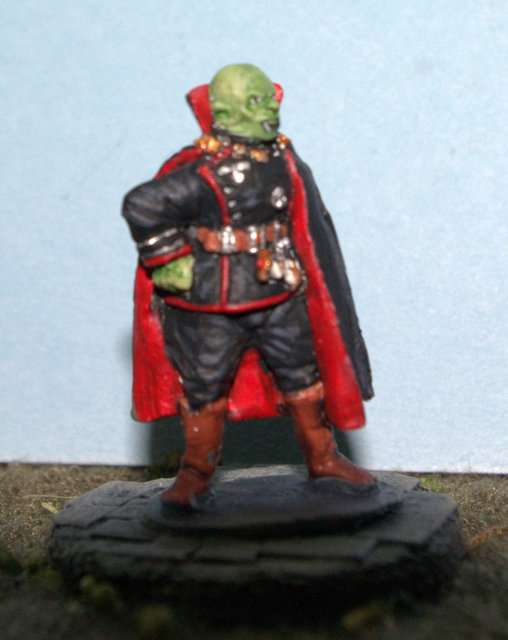
Regular visitors to this blog will know that I have been mildly obssessed for the last six months with a gaming project along the lines of something popularly called "Weird War Two". This subgenre admits a number of possibilities (occult, pulp, late war mecha) and in a later post I'll address how I understand these taxonomies. For now, though, I need to work through the ethics of a game concept which takes a dark premise (Nazis and the Third Reich) and then amps it up by adding additional badness to the bad guys (eg, my SS Vampire character, whose skin these days is somewhat less green).

For the last few weeks I've been thinking about the moral implications of this project, and of the "Weird War" subgenre in general. Perhaps it will seem to you as if I am overthinking this, but humour me for a moment. My questions began thanks to a number of gamers I greatly respect, who have issues with playing the bad guys, and who make convincing arguments that playing the Nazis in a WW2 game is problematic for anyone concerned with being virtuous. If you are interested in exploring this argument, an excellent place to start is the post "Virtue And Wargaming" (see http://ancientrules.blogspot.ca/2012/09/virtue-and-wargaming.html) by Polemarch, one of the smartest and most provactive wargaming bloggers I know of.

In this post, Polemarch asks why it is that we don't usually hear debates about the ethics of playing the Ancient Romans, whose empire was founded on highly organized and brutal repression conducted at a geopolitical level, whereas we sometimes hear arguments about the ethics of representing the SS on the gaming table. Polemarch argues that because the Romans are safely removed in the lost world of the distant past, we don't feel many moral qualms in thinking about Rome. With the Nazis, Polemarch argues, it is quite different:

"The difficulty, then, in terms of wargaming Nazi Germany, is that we too live in a system which is not wildly dissimilar. While I am sure that no western style democracy is headed in that direction, Nazi Germany is close enough to us to permit us to imagine that it could. In short, we can much more easily identify with the people on the ground, receiving orders that they either execute or get executed themselves. This places the moral question directly before us: what would you have done?"

So as I understand his argument, because the society and the people represented in our WW2 games are much more similar to us than, say, the Ancient Romans, our games become models of moral choices that should, at the least, discomfort us as gamers. I suppose one could say the same thing about representing modern societies other than Nazi Germany on the gaming table. Are there moral challenges in representing NKVD units, or western forces engaged in Operation Phoenix (see http://en.wikipedia.org/wiki/Phoenix_Program) in a Vietnam game? Surely the problem is much broader than just a few SS figures on a tabletop, since modern wargaming allows the representation of many evil regimes and armies? But perhaps I digress.

So here's my point. Any game which adds "Weird" to "World War Two" will inevitably make the Nazis ever nastier, albeit in a highly fictive form of narrative. An example I saw recently is a Kickstarter RPG project that adds Cthonic elements from the Lovecraft sub genre to Nazi Germany. One might ask why anyone would want to add yet more horror and evil to a conflict that set the modern standard for horror and evil. Conrad Kinch posed this question quite well in the gaming ezine The Gazebo, when he asked, in effect, how could we possibly make World War Two even more horrific by adding mythic/pulp elements such as, say, zombies? Isn't the real horror of that war enough for anyone?

On a related line of thought, assuming, pace Kinch, that one decides to add mythic or pulp horror elements to World War Two, does that not trivialize the scope of the evil committed by actual human beings? How could an SS vampire be even more horrfying, any more evil, than an actual figure such as SS General Reinhard Heydrich, seen in this link as portrayed in the HBO film Conspiracy by Kenneth Branagh? I like Conspiracy, and the German film it emulates, The Wannsee Conference, because they capture what Hannah Arendt famously called "the banality of evil". If a monumental evil such as the Final Solution could be set into motion by bureaucrats calmly sitting around a conference table, then do we really need Nazi vampires? If we transpose evil into the realm of the mythic, do we run the risk of forgetting and ignoring the evil that ordinary people can achieve in the real world?

Setting aside these objections, it seems to me that the Weird War Two genre, if we are to pursue it, offsets the amped up evil of the villains (Nazi vampires and the like) by adding superheroic, juiced up good guys (see my blog header for an example). In my own Weird War Two world, I have deliberately set it in the early days of World War Two, just after the Fall of France, when only a few people in Britain realize that occult forces are stirring within the Reich. By creating an atmosphere where "Project Alice" and its characters are mobilizing as a small army of light to fight the darkness, I am trying to pay tribute to that pivotal moment of existential danger in 1940 when Britain and her colonies stood alone against Hitler and the fate of the world hung in the balance. My good guys thus complement the mythic nature of the storytelling by adding caricatures of good (saintly padres, lantern-jawed soldiers, brave and resourceful women resistance fighters vs the forces of darkness in Nazi uniforms). That's the idea behind my Weird War Two setting, but does that approach of mythic good versus mythic evil not deepen the cop-out by substituting fictitious good guys for flawed, human, banal guys who may or may not have been good, but who were on the winning side?

As the Polemarch has said, it all depends on how postmodernist your view of history is. Seeing the summer of 1940 as an historical hinge moment, an existential crisis of good versus evil, is one interpretation of history, but it is a modernist view that buys into one narrative for World War Two. The actual narrative of World War Two was far more complex. Britain went to war for Poland and then sold Poland out at Yalta. For reasons that seemed to make perfect strategic sense, the Allies escalated the bombing of military targets into the bombing of whole cities, while refusing to commit bombers to attacking the infrastructure of the Holocaust. Churchill may have stood for defiance and freedom in 1940, but he also fought to preserve the Empire, something his American allies never supported. The reality is complicated, messy, and considerably less mythic than the stories we would tell of it. Turning World War Two into Weird War Two could be seen as an ethical cop-out, in that it overlays a messy and difficult conflict with a mythic narrative that allows us to avoid the moral nuance of history.

I would agree that a postmodernist caution of single narratives is helpful, but I also think (and here I nail my colours to the mast, finally!) that it is still possible to speak with moral clarity about a subject like World War Two. For all the awful or ambiguous things that the Allies did or did not do, it was a fight for the survival of a vision of humanity that transcended race or ideology. British historian Michael Burleigh makes this point with great clarity in his 2011 book, Moral Combat: Good and Evil In World War Two (New York: Harper Collins, 2011).As Burleigh describes it, the central narrative of the war is of millions of responsible adults who were confronted with difficult decisions and an often “overpowering” temptation to immorality. In such a context, Burleigh says, it is remarkable that the number of those people who made good decisions was such that “a vestigial regard for decent or lawful conduct survived at all”.

To summarize, after thinking this through, I don't believe that Weird War Two has to be an ethical cop out. Going ahead, I will try to let the following principles guide me. One, Weird War Two is a way of telling the story of some aspects of the actual war in a mythic way. Two, my villains will point to the reality of evil in World War Two, without trying to replace or trivilaize that reality with caricatures. Three, my heroes will honour the moral heroism of real men and women in that war, without trying to minimize the complexity of the choices faced by them and the courage it required to make those choices. Four, the project will try to tell its own story, using creativity, humour, and broad strokes, rather in the way that the old films of the 1940s and 1950s did, while remaining respectful of the historical stories as we understand them. Fith and last, the project will be guided by Burleigh's these that World War Two was indeed Moral Combat, a struggle between good and evil at a fundamental level, and needs to be remembered as such. I hope I can succeed at these goals, and hope that you will tell me what you think as I go along, for that is the fun and the goal of a blog.

Thoughts?

Wednesday, January 16, 2013

A Really Big Wargame

Saturday last I was fortunate enough to attend a day of lectures by one of our officers, who I will just call Major Jim, on tactics in the attack and defence. This lecture was for a mixed audience of ranks and units, Regular and Reserve, conducted at the armouries of the South Alberta Light Horse (affectionately called the Sally Horse) Squadron in Medicine Hat, AB.

As an aside to military historians out there, the SALH served in the Normandy Campaign as the South Alberta Horse, and one of their officers, Major D.V. Currie, a welder from Moose Jaw, Saskatchewan before the war, is the only officer of the Royal Canadian Armoured Corps to have won the Victoria Cross for his actions near Falaise in Normandy. That's Currie, below left, holding the revolver, in this famous photograph.

Here is Major Jim, holding forth on the armoury floor, in a photo I sent to him entitled "Master of the Battlefield". Jim wrote back to say "Apparently either I went to mime school, or I was getting ready to meet a female later that day." Jim came up from the ranks, served on nine (maybe more that he can't talk about) deployments, was shot while in Bosnia (his advice, "Don't get shot, it's really painful and it sucks"), and instructed at the infantry training centre at CFB Wainwright. He knows his stuff, and despite his claims that he is merely a dumb infanteer, is easily one of the smartest and nicest guys I've met in the Army, though he could probably kill me three different ways with a coffee stir stick.

The rather unconvincing map, made of a large tarp and three dozen boxes of printer paper, illustrated a ridge line, and the problems discussed were how to attack and defend this ridge using a combined arms force that looked like the Canadian Army plus kit (ATGMs, attack helicopters, mortars and even MLRS systems) that we no longer have or have never had in our order of battle. The OPFOR (opposing force) was a combined arms force using Russian kit (BRDMs, BMPs, T55s and better). When I asked Jim latter why we were still talking about fighting the Warsaw Pact, his answer was that Army doctrine is now shifting back to basics, on the theory that we are at risk of losing key knowledge following ten years of fighting a lightly armed insurgency in Afghanistan. When one considers that our next deployments may be to African hotspots where the bad guys do have armour and aviation, this shift makes sense.

Speaking of gaps in the Canadian Army inventory, I have to say that there was a shocking lack of toys, and what we did have to work with was in pretty rough shape. Unacceptable! Damn these budget cuts and these parsiminous pennypinching parliamentarians!

I have to confess that I spent the day using my wargaming ears more than my chaplain ears, though it was interesting to think of how my trade might be employed in a more mobile, conventional war. In Afghanistan chaplains are mostly confined to bases, but in a force on force war we should go back to our traditional places forward, such as Casualty Collection Stations, but that's another point. As a wargamer there were two things that really stood out for me.

The first was Major Jim's emphasis on recconaissance in the attack, which may have been tailored to his audience since the SALH now have an armoured recce role. To the question, what should recce elements be looking for and noting, his answer, repeatedly, was EVERYTHING. Everything seen on recce is of potential use to the commander planning his attack, from the location of kill zones, of run-ups and gaps in the obstacles on a defensive position (showing the likely moves of the armoured counterforce) to plumes of exhaust seen during engine warm up cycles (how many vehicles are present, in what shape are they, how good is the enemy's training, etc). I got to thinking of how badly recce elements are often represented in wargaming, on the level of, here are your armoured cars, go get them killed and find out what's under those blinds. I would love to see a scneario where the goal was to approach an enemy position, develop as complete picture of it, and safely get back to report. I'm not sure how much fun that would be for two players, but it might work well solitaire or as a team game with a referee playing the enemy.

The second learning for me was the importance of the mobile defense. As Jim explained it, defending the position alone is a good way to lose, as the enemy have the freedom to maneuvre into attack positions without hindrance, can get get good locations for FOOs and FACs, and can coordinate their attacks with artillery designed to suppress and disrupt rear areas, resupply points, and routes for the enemy countermove force. If however the defender has sufficient forces to put a guard force ahead of his main defensive position (MDP), he can trade ground for time, and strip away enemy resources (first recce, then anti-tank, then command and control, etc), this forcing the enemy to attack blind and uncoordinated, or to delay the attack while fresh forces are brought up. Modern wargamers schooled in NATO vs Pact will understand this theory better than I do. In most games I've seen and played in, the constraint of available table space forces one to play a set-piece battle, where the fight happens on or very close to the main defensive position. It would be interesting to have the time to play the defensive battle in several phases, first the battle of the guard, second the withdrawal of the guard through the MDP, and third the fight for the MDP itself. In each successive phase, losses would be deducted and capabilities removed from both side depending on how they fared in the previous phase. This could be more easily done in smaller scales than in big ones, I think.

I could go on, but I think you get the point that it was an interesting day, with much to absorb, and with much food for thought for the wargamer. It leads me to wonder, for those of you who are trained in military operations and tactics, how much of your training to you get to use on the wargames table?

Blog Archive

Followers