Monday, April 6, 2015

Six-Squared Studios - My Hot Lead 2015 Discovery

They say that good wargames are made by bases, faces, and flags, which is a motto I try to live by.  But how to get the bases?   Folks in the UK can order from companies like Warbases or but their product at all those amazing shows you folks have in your tiny little country.  Not saying I’m jealous … well,  not much.

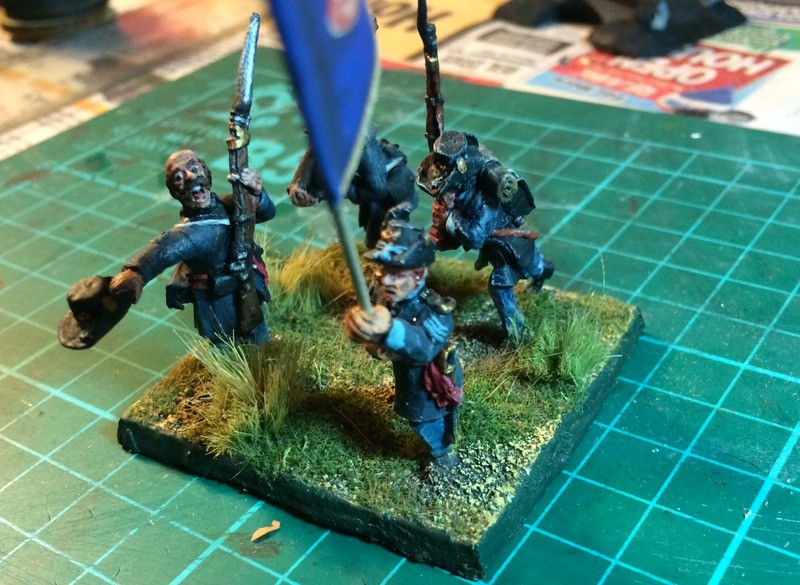
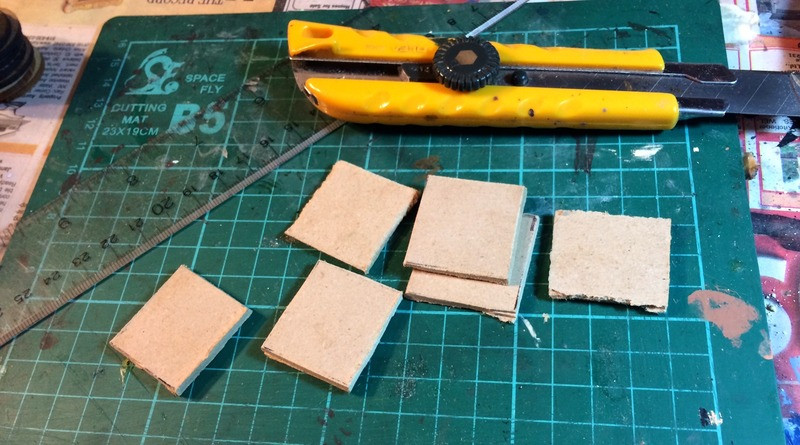
 Lacking ready access to Warbases, here’s the sub-optimal solution. Here’s how I’ve made bases for years and years.  Buy a sheet of MDF, use a ruler to make moderately exact squares or rectangles with a pencil, and then cut them out with a craft knife.   I try to do this without incurring carpal tunnel syndrome or without amputating a finger tip.  As you can see from the top image, the results are a little ragged looking.


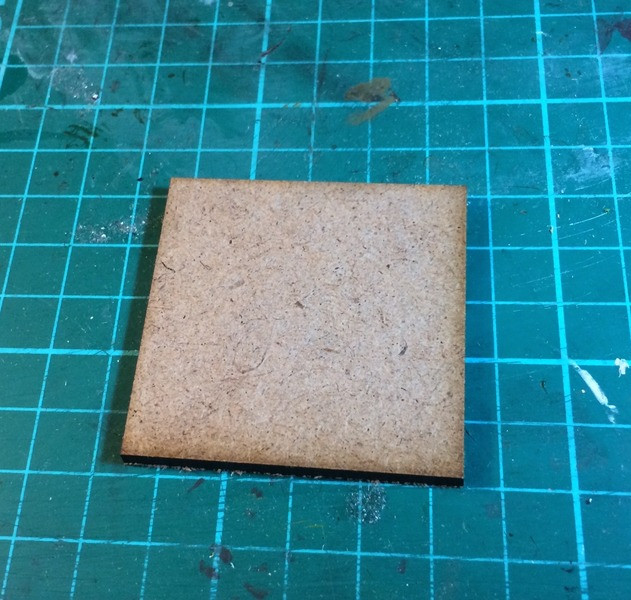
A better way.  Here’s one of Six-Squared products, a laser-cut 2” by 2” piece of MDF.  Nice, huh?

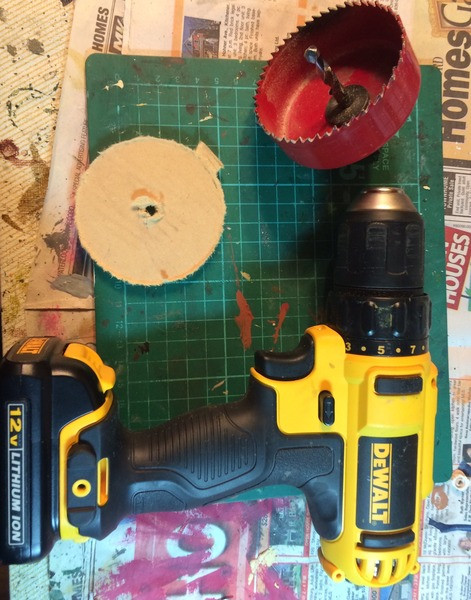
Here’s how I make circular bases.  A drill, a circular drill bit, a jagged piece of MDF that needs lots of trimming, and lots of sawdust all over the place.

Better.  Six-Squared laser cut circular bases.  

Six-Squared are a Canadian company based in St. Catherines, Ontario.  The products in the photos above were purchased (this blog does not review free samples, since, well, no one’s asked me too)  at Hot Lead this year and I quite like them.   They make a ton of products besides bases, including resin haystacks, craters, and river tiles.  They will make custom bases to your specifications. Their website is found here.   Check them out, and save your fingertips!


Sunday, April 5, 2015

Sunday Painting Bench and Weekend Roundup

A very happy Easter to all.  I hope this weekend was restful and pleasant to you all, and holy for those who needed it to be so.

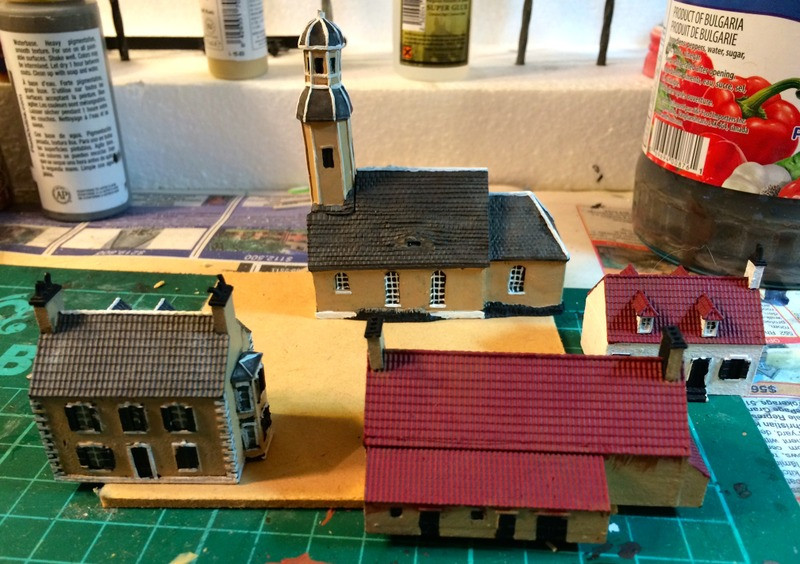
Here’s the state of the Padre’s painting desk this weekend.   I’ve been cracking on with my 6mm Napoleonics project lately, and finally have enough French and Austrians based that this coming week I can dive into the Sam Mustafa Blucher rules and give them a test drive.   However, I am woefully short of scenery, and I’ve pushed this project to the front of the queue.  The church is a Timecast model, and quite a lovely one too.  The other buildings are GHQ, purchased at the Hot Lead bring and buy a year ago.   My plan is to get them onto some scenic bases that can also accommodate a stand of infantry figures to represent a village being held by one side or the other.  Hopefully I’ll have them finished and pictures up later this week.


 Speaking of Sam Mustafa, Friday I had James M over for Indian takeout and a Civli War bash using the Longstreet rules.  Poor fellow needed a rest after organizing another triumphant Hot Lead, and I figured that in his fatigued state I might get a win in. We were going to try Blucher but James noted my look of perplexity when reading the unfamiliar second half of the rules book, about army lists and so forth, and so we decided that we would try Longstreet instead, which I know fairly well now.

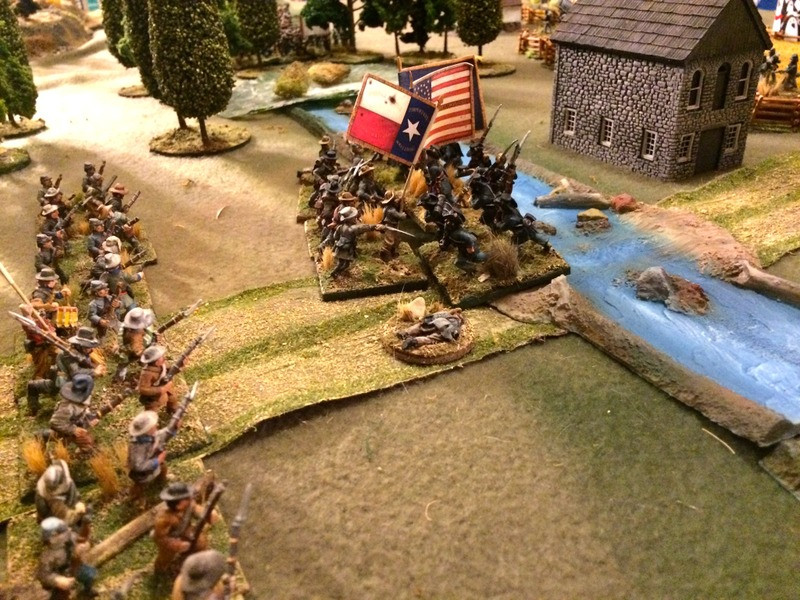
The Battle of Bloody Creek centred on this little ford.  Two symmetrical brigades, each of three seven base infantry regiments, three bases of artillery (2 six pounders and 1 howitzer) and a seven base cavalry regiment, met to determine ownership of the ford, and the resulting struggle gave the name Bloody Ford, by which locals still remember the action.  We rolled randomly for the year, and got a battle in 1861, so all units were classed as Eager Recruit.  My Texans and Mississippi boys under Colonel Eusebius (Seb) M. Letchworth were looking forward to their first battle of the war, having never seen the elephant.

Here James’ Wisconsin volunteers charge across the ford and put my Texans to flight.  Fortunately I had a regiment of Mississippians ready to counter-charge.   Two lessons from this episode.  One, in Longstreet, Eager units always have an advantage in melee combat so charge with them when you can, even when they’re recruits, and two, reserves are always useful.

My suspicions of Longstreet were well founded, it is more fun than a camp full of drunken Zouaves when played with a real live opponent.  The cards provide quite a few tense moments and a few enjoyable opportunities to play dirty tricks on your opponent, like the time I rashly pushed my infantry forward into canister range and James played a card giving his three base battery an extra die each, making for a nerve racking nine dice in the roll to hit.  Very exciting stuff, and yet the cards, while they seem gimmicky, do a good job of simulating the vagaries of ACW combat. 

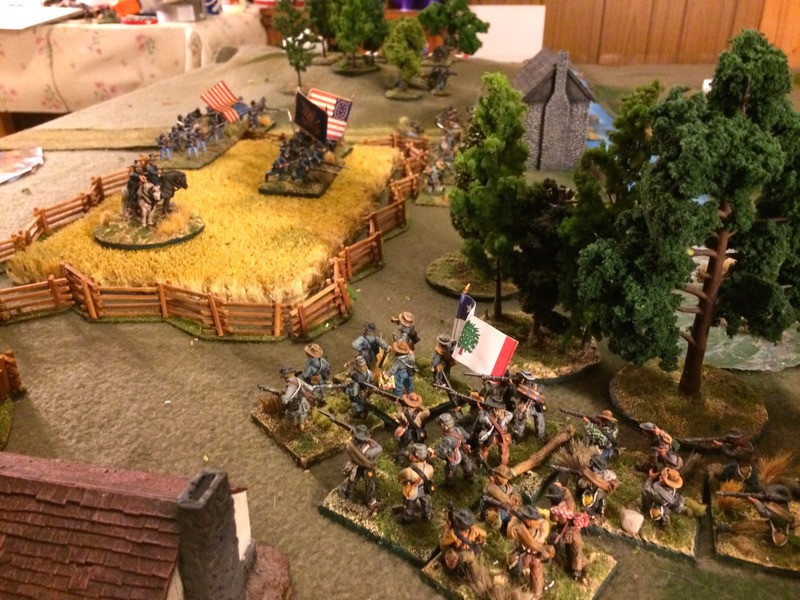
Here James’ commander points in alarm as my third regiment rushes forward in column, trying to get on his flank.  This was a risky move, as James was about to hit my column with his two uncommitted units, a cavalry and infantry regiment, but I had the satisfaction of shutting him down with the dreaded Pinkerton Intelligence interrupt card, which basically casts a hesitate spell on the Union when they declare a Combat (charge as opposed to movement) round.  Now some will say that this is overly gimmicky, the equivalent of magic, and that’s fine, but in Sam M’s defence the card is only given to the Rebel player in 1861 and 1862 scenarios, and if he is lucky enough to draw it he can only play it once per game, so you could say that this is a little bit of friction which models the indecisiveness and inexperience of many early war Union armies.  In later scenarios the cards available to the Union player become more plentiful and more effective than those given to the Rebel player, so it is an effective way of modelling the shifting qualities of the armies during the course of the war.

One of the things some people might not like about Longstreet is that command figures are essentially immortal and quite irrelevant to the battle.   All the command and control aspects are modelled in the cards.   Some commanders have personality attributes which can influence play (allowing re-rolls on to hit dice, for example) and there is a risk in using these attributes, in that it can lead to “wounds” which reduce the number of cards a player can hold in his hand during the game.   Having your hand reduced by even one card to a maximum of only three cards in the hand for multiple wounds when your opponent has six cards in his hand would be quite disastrous and quickly lead to a defeat.

James put up a cracking good bat rep here, complete with a photo of yours truly gloating.  He says it was gloating, I say it’s proof that these rules are cracking good fun.  The Union side was forced to retreat, leaving the Confederates in control of the now renamed Bloody Creek.   We both went through the post-game steps of the Longstreet Campaign Rules, figuring out how many troops came back to the colours after the battle, how many died of flux in camp later on, and what reinforcements we acquired.  Both of us did well in different ways.  Both of us got an Epic Point for showing up, I got one for winning, and we awarded me a third for two successive successful charges by my Mississipians.  Seb Letchworth got promoted after the battle, which is really only useful for bragging rights.   In the reinforcement stage, James got a fourth regiment, I got a fourth artillery base, and we now have a variety of unit sizes and experience levels in our commands, so you may see a re-match at some point.

Wishing you all a good week, with blessings to your brushes and die rolls!


Wednesday, April 1, 2015

Tuesday Night Boardgame on Wednesday: Still Taking Berlin

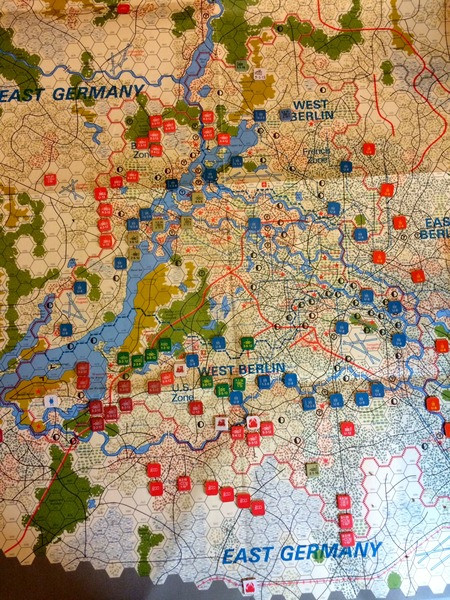
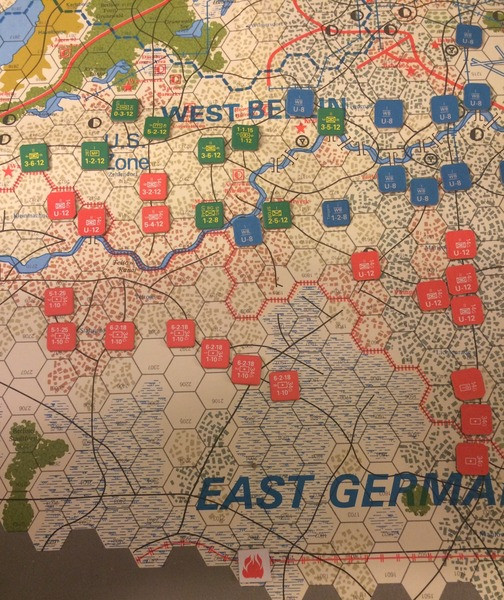
Picking up from last week, here’s the board on the dawn of the second day of WW3 and the Soviet assault on West Berlin.   In the bottom left, the East Germans have overrun Wansee and the Americans are falling back slowly.  In the south, 14th Guards have taken wicked casualties in exchanges with US and West German police and have had their teeth pulled.   In the North the French have stabilized their sector but the main weight of the Soviet attack now appears to be falling on the British.

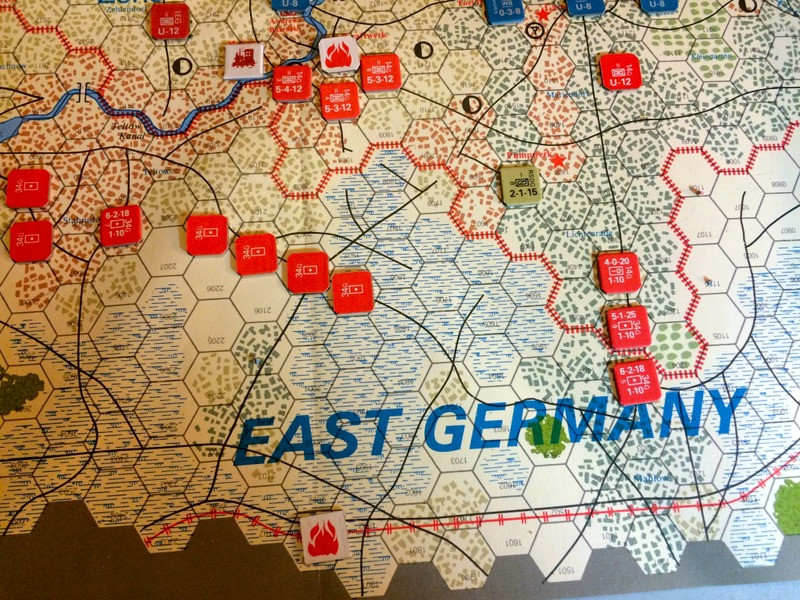
 Here’s a thorn in the Soviet side.  That little green unit between the T and B in West Berlin is a single US battery, but it’s done nothing for the first three NATO turns except execute fire missions on the vital railroad line (see the flame marker at the bottom of the photo) feeding reinforcements and supplies to the main front.  Each fire mission is worth 5VPs to NATO, more than offsetting losses in casualties and objective hexes thus far.  It is totally untouchable for now, the Russians don’t have the troops to touch it.  Most of the red units towards the bottom of the photo are 34GDs Army artillery, not assault units.


Here’s another cool NATO move.  That little brown unit is B Squadron of the Royal Scots Dragoon Guards, the most mobile unit in the NATO garrison.  It’s exploiting some gaps in the line to try and get onto one of those rail hexes.  If it can do it, that will be 10VPs per turn it stays there and will divert some Pact combat units to find it and kill it.

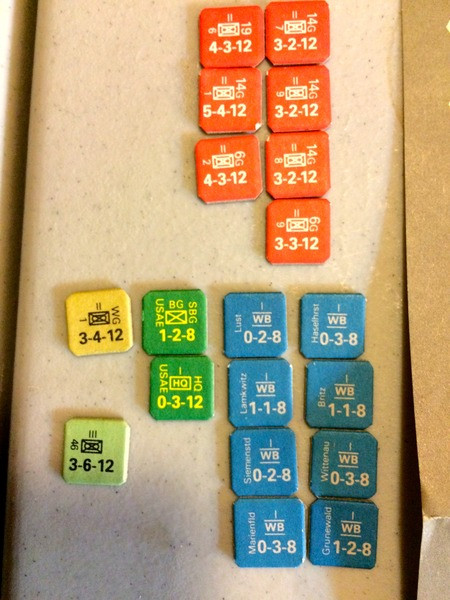
 The butcher's bill so far.   Combat in this game is quite bloody.  

Much as the Pact commander will hate to do it, he may have to ask for release of the airborne division to make the headway he needs.

Sunday, March 29, 2015

I Broke the Guard: And Other Hot Lead Experiences

I’m back from a very pleasant Friday night and Saturday at Hot Lead, Ontario's premiere gaming convention.  For all I know it may be among the biggest miniatures conventions in Canada, but I’m not qualified to speak on that.  From what my friend and HotLead kingpin James Manto told me on Saturday, the numbers in attendance were high and the vendors all seemed to be satisfied.  Games from north and east of Toronto, and from as far south as Michigan make the trek to Stratford for this early spring event. The Bring and Buy, always a favourite at Hot Lead, was a swirling mass of greed and pillaging when it opened on Saturday at 09:30.  The Bring and Buy tables were crowded three deep and I didn’t get close to them until they were picked fairly clean.  

It was hard to see a theme or a trend in the games on display this year.  Fantasy SF games seemed very popular, from skirmishes featuring Colonial Marines vs Aliens (from the movie series) to Battletech to Star Trek and Star Wars themed games.   Ancients were well represented, as were Napoleonics, both on land and age of sail.   World War One games were fairly plentiful as well, perhaps because of the centennial.   Vietnam seemed more popular than WW2 - I saw a Bolt Action game but Flames of War was conspicuously absent.  In fact, I noticed a LOT of Battlefront FOW kits and figures remaining in the Bring and Buy hours after it had been combed through, suggesting that FOW’s day may have come and gone.    I didn’t see a single American Civil War land game, though there were several ACW naval games.  That’s my take on wargaming trends as I see them, for what it’s worth.  You can get a great overview of the games from this blog post by James Rabbitman Manto, who deserves an OBE and stiff drink for putting this all together.

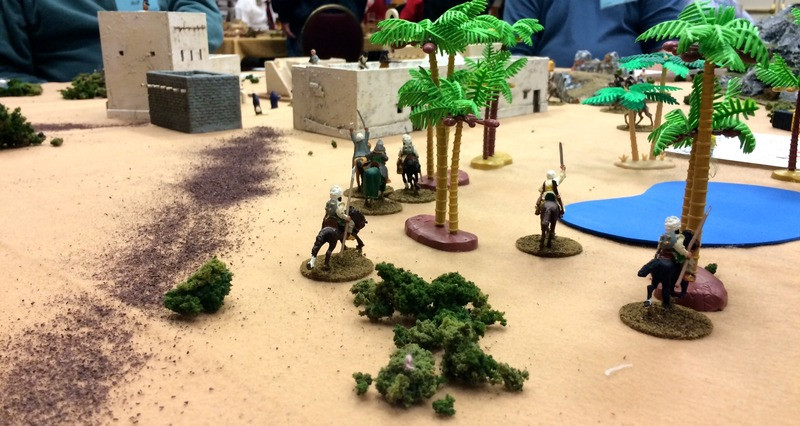
Friday night I got a seat in a pickup game of In Her Majesty’s Name run by my friend Barry.  Five different factions (Turks, Brits,French, and two Arab trades) converged on a village where a sheik was hoping to sell a prisoner, a European lady (of course), to the highest bidder, in story vaguely reminiscent of The Wind and the Lion.   Here the different factions converge on the village.  The sheik and his men held the lady on the roof of the mosque, the long building on the right.  The only way to get her was to go up the stairs and take on the sheik and his men.
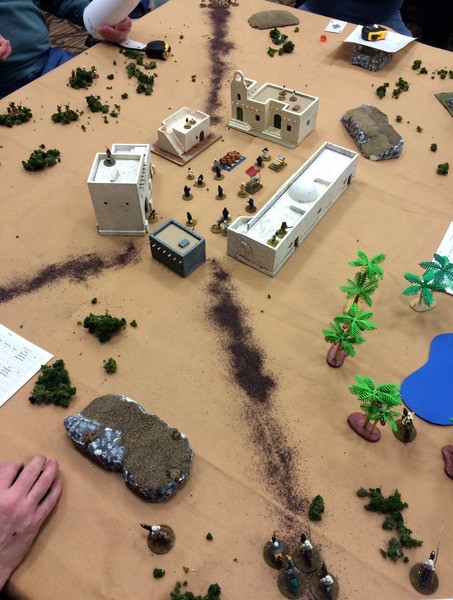
My Arab cavalry head towards the mosque.  Their holy man had some spells that proved useful, but weren’t enough to get up the stairs.   My experience of this kind of all vs all games is that the side which hangs back and lets the blood flow is generally the winner.  Despite my offer to make to invite the Sheikh to my wedding as my honorary father in law and to give him a handsome dowry for the European lady, we could not strike a deal.  I thought I could force the mosque, get the girl, and escape on my horses before the others stopped killing each other.  I was close, but not close enough.  It got quite funny when the Turks and Europeans intruded on an Arab family quarrel.  The Arab players all agreed to ally and fire on the others, though there was still some fraternal treachery going on.

This is the second time I’ve played In Her Majesty’s Name.   I have to say I find it too granular, there are too many dice rolls to achieve limited results, and I find it moves rather slowly.  But it was a fun game.
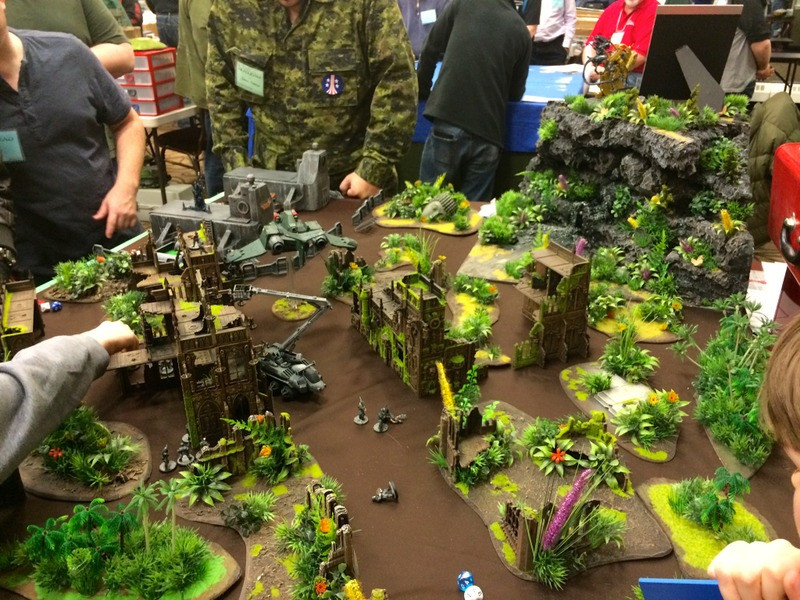
Behind us on Frida this Marines vs Aliens bug hunt was going down and looked rather exciting.  I found the fellow in the uniform a little disconcerting - he had commercially purchased fatigues and a USMC style cap in Canadian pattern camouflage with some space marine badges on it, which was the closest Hot Lead came to cosplay.
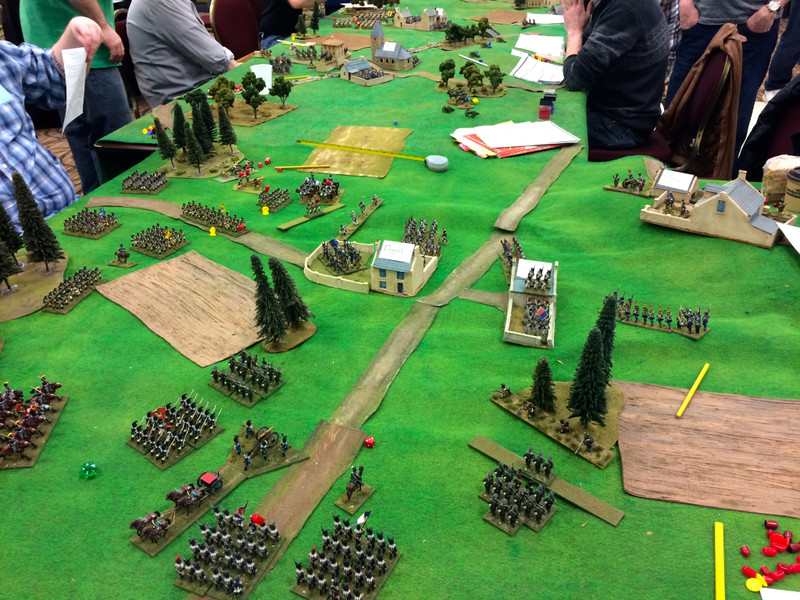
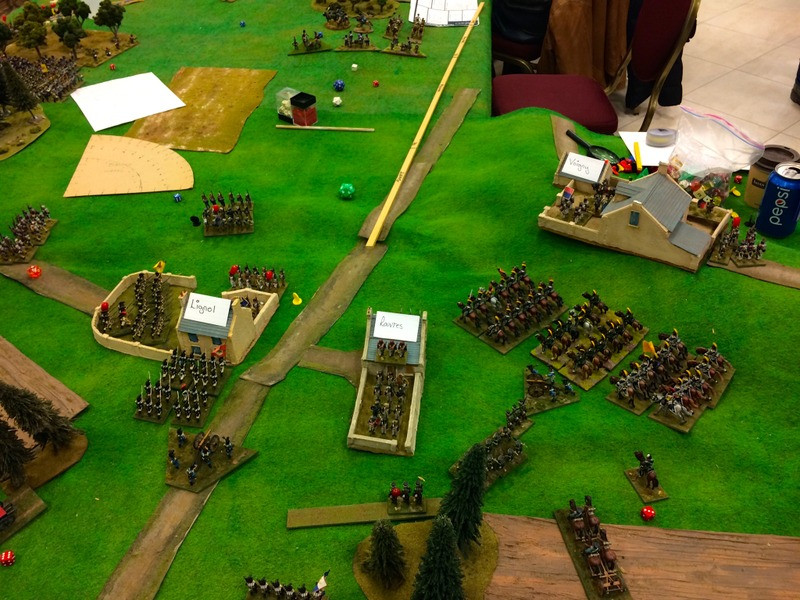
On Saturday my goal was to get into two Napoleonics games.  This is the battle of Bar Sur Aube, which occurred in 1814 as Oudinot’s French tried to halt a large Austrian force invading La Patrie.   I got a brigade of Wurrtemburg infantry, seen at the bottom.  Two other players at my end also got Wurts - the fellow in the blue checked shirt on the left has the other infantry brigade, and there was a cavalry brigade as well.  Our job was to capture the two villages represented by the houses in the centre, and then move up the road and link with the Austrians who were trying to bull their way through at the faaaaaarrrr end of the table.  The figures were well painted 28mm metal, quite lovely, and the rules were Shako 2, which I’d never played before.
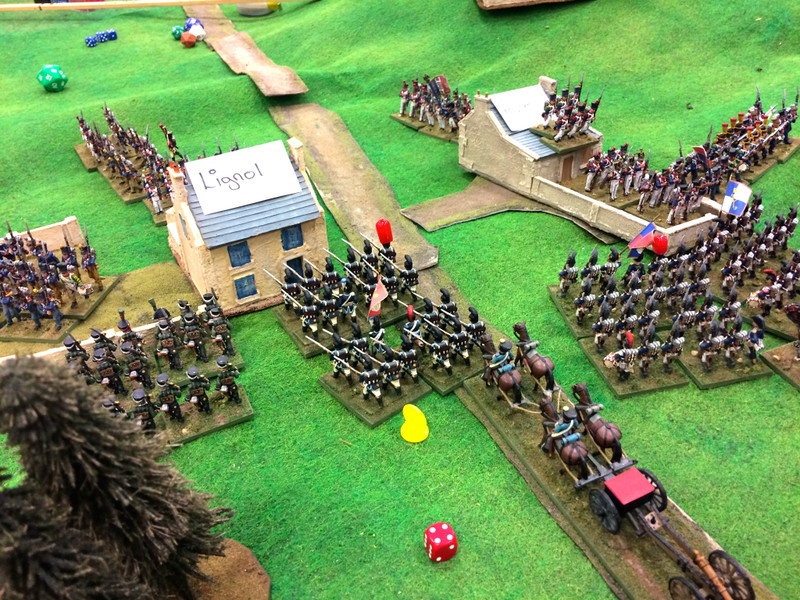
Here elements of the two Wurrtemburg brigades try to assault the villages.   I quickly learned that attacking a village with a weakened unit was suicide. In fact, I found Shako quite bloody.   Units were quite fragile and vaporized quite quickly.
 

After five hours of play, here’s the end state at my end of the table.  My two co-commanders had given up.  Blue shirt guy had been savaged by long range French artillery and a French light cavalry unit that was luckier than it had any right to be.   That plus several bloody repulses on the villages led to 50% casualties for our infantry.  Finally close range cannister on the villages weakened the defenders and allowed the Germans in, but at the top of the photo you can see three French batteries, two of them heavy, that commanded a lethal field of fire.  The Wurrtemburg cavalry had swung around to the right, a movement that cost much time, and it would have been suicide for it to advance further.   I heard vague rumours of my Austrian allies winning at their end of the table, but I was too tired to really care.  Big games at conventions, with lots of ambient noise, can be a hard slog on the game masters and players, and  while the idea for the game was epic, it may have been unfeasibly large.  

I remain undecided about Shako 2.   There didn’t seem to be a any command and control rules, so our leaders appeared to be purely decorative, and as I said, very very bloody.
 

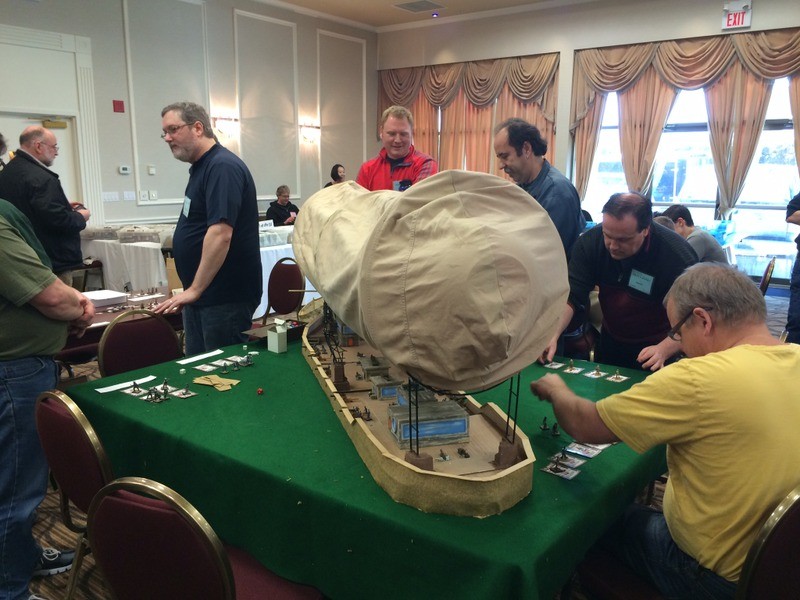
Some other games going on Saturday.  This steampunk skirmish game, hosted by miniatures company RAFM using their figures, had a monstrous airship thingy in the middle of the table.
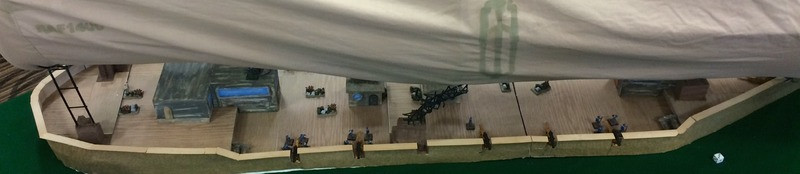
Players had to carefully get at the chaps beneath the gasbag.
 

A 28mm Belgium 1914 game going on beside my big Napoleonics game.  
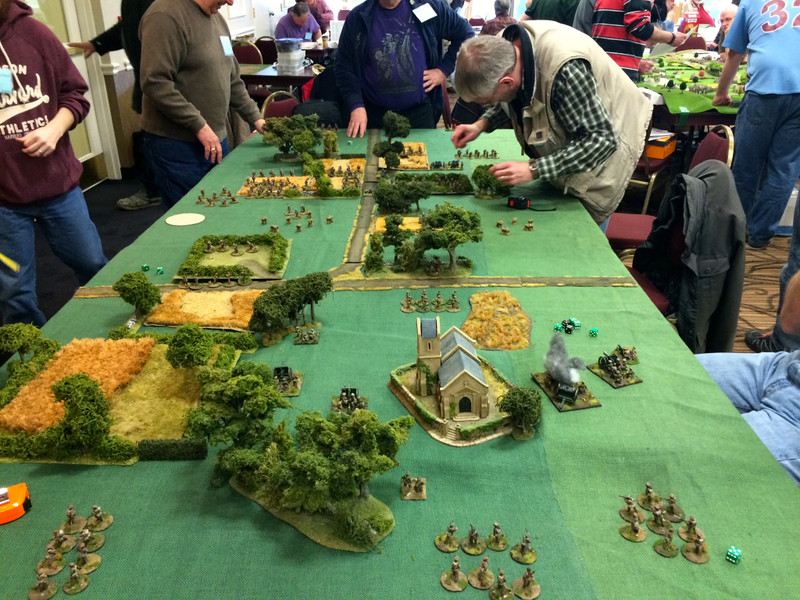
 

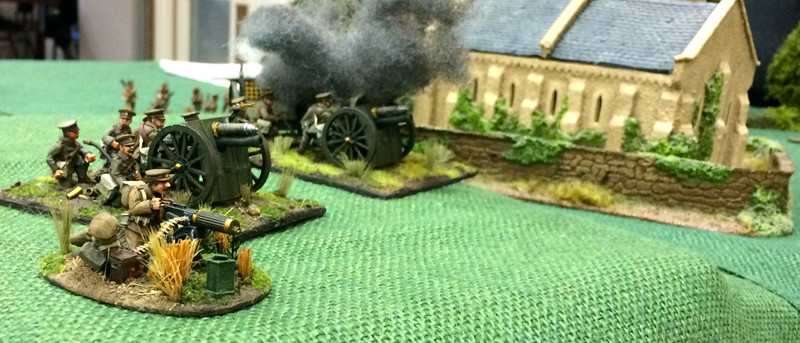
British guns and MG team hold firm beside a church, making it a target- a hard day for the anxious priest, no doubt!
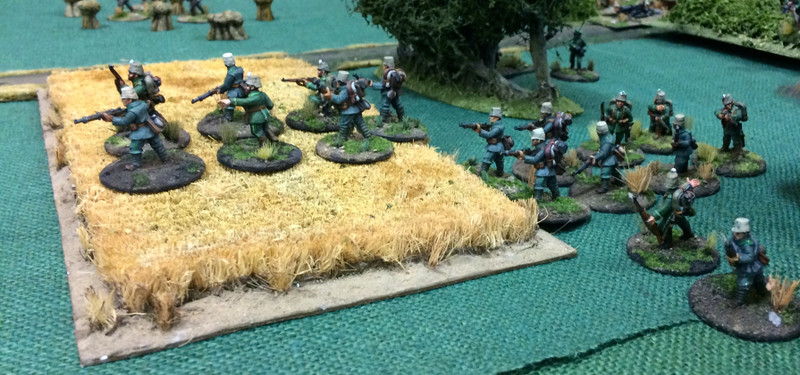
Beautifully painted German infantry advance.
 

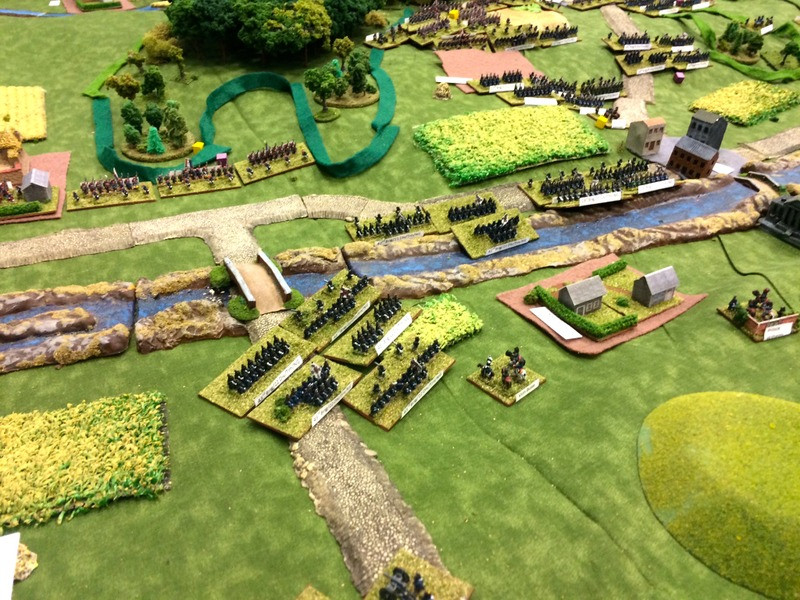
The indefatigable Brian Hall, one of the many talented game masters from the Kent Essex club, ran this lovely looking 6mm Franco-Prussian War game.


More of Brian’s FPW goodness.
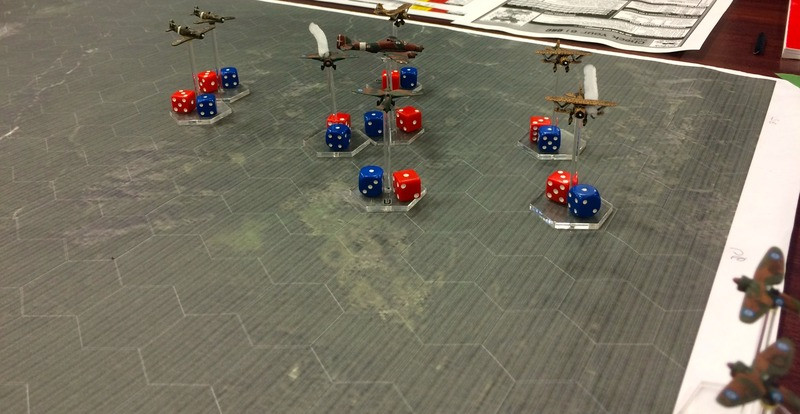
Another Kent Essex impresario, Keith Burnett, ran this lovely WW2 air game featuring the Greek air force taking on the Italians.
This Star Trek themed game was one of the many SF games there.  
 

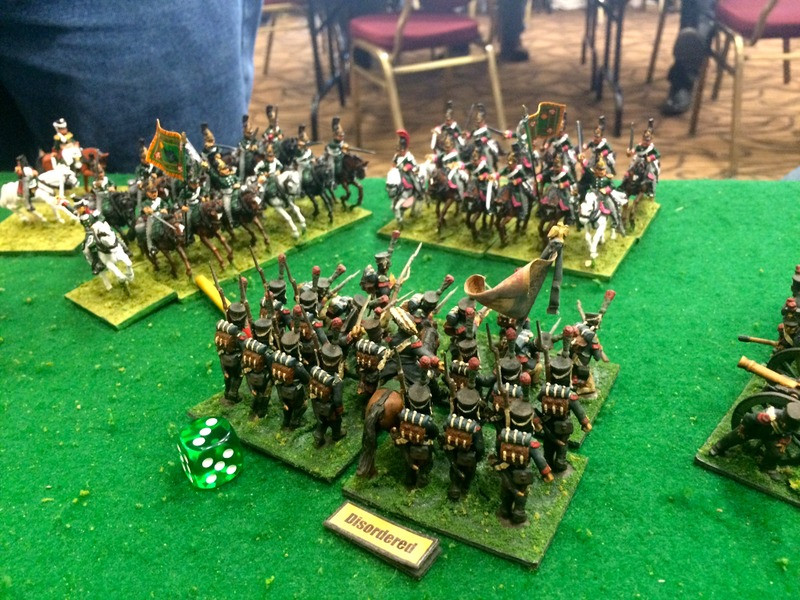
My second Napoleonic game of the day.  Dan Thompson and Kurt Hummitsch ran a Borodino game using their collections of 28mm figures, mostly plastic but no less impressive for that.  Two interesting and contrasting painting styles, Dan’s dark and “grungy” (his word) French, with extensive use of dip and washes, vs Kurt’s bright and light Russians.  Hard to tell which style I liked better.  The rules were the Osprey-pubished Fields of Glory Napoleonics, which I found very different than Shako.   The command and control system seemed similar to Black Powder, with units being allowed extra and complex moves if they rolled certain numbers.  Unlike what I saw of Shako, the placement of generals in FOGN was important.  In another difference, units in FOGN do not take individual hits or figure/stand losses.  Rather, their moral can go from Good to Disordered to Wavering to Broken and back, so the units effectiveness and cohesion as a whole are important.
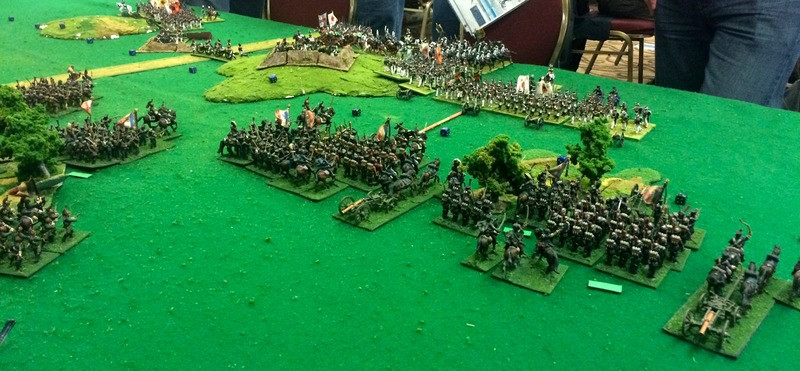
 

French  press the attack.  One of the cool things about this game was that the three French players were all named Mike, so we became Left Mike, Centre Mike and Right Mike.  As Right Mike I commanded the Guard, and pushed them far to the right, effectively pinning the Russian cavalry to their start line, while Centre Mike pushed hard with his divisions.   We broke several Russian infantry divisions, but my Young Guard (visible in the forested area below centre right) were Wavering and stubbornly would not rally.
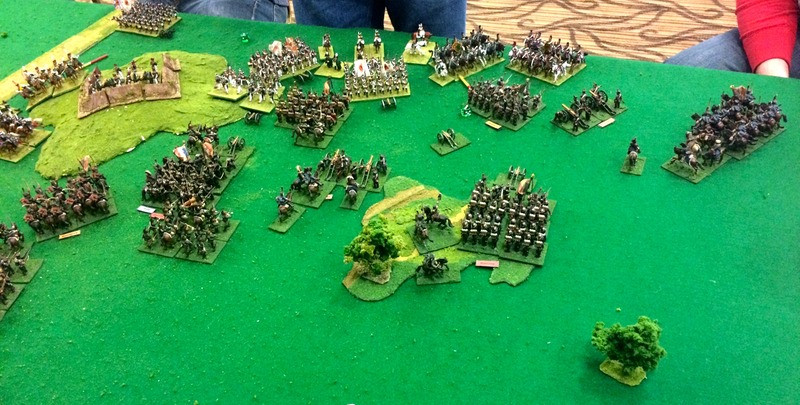
Napoleon goes to the right wing to steady the Guard light cavalry for a key countercharge.
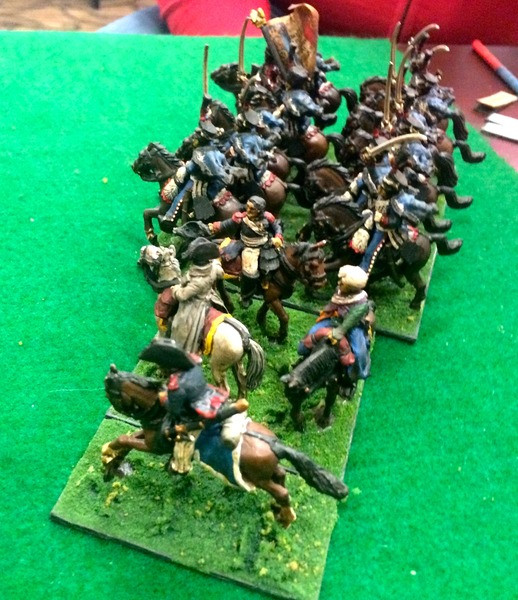
 

One of the two Russian Dragoon units was wavering with its flank to the Old Guard.   Even though they were Disordered, infantry in these rules can charge wavering cavalry.  Breaking the Dragoons might have unravelled the remaining Russian Left Wing, but the Guard rolled poorly and only pushed the dragoons back.  The other Russian Dragoon division charged the blown Guard in the flank and broke them, routing them back under the eyes of Napoleon himself.  It was bad news for the French Right wing, but the Russians were too battered to resist in the centre, and Left Mike had been heroically making bricks with straw the whole game and had blunted the stronger Russian right wing.  Victory, though I fear Marshall Right Mike will get a convict battalion of refractaires in Sardinia as his next assignment.

So the takeaway for me is as follows.

It’s good after a gaming con to say “I broke the Imperial Guard."

It’s bad to say in the next sentence, “I commanded the Imperial Guard."
So ended Hotlead 2015, more geeks, dice and glory than you can shake a D6 at.   I did pick up some loot, and more on that in another post.

Blessings to your die rolls!
Thursday, March 26, 2015

Some Yanks: Vintage Old Glory 28mm ACW Figures

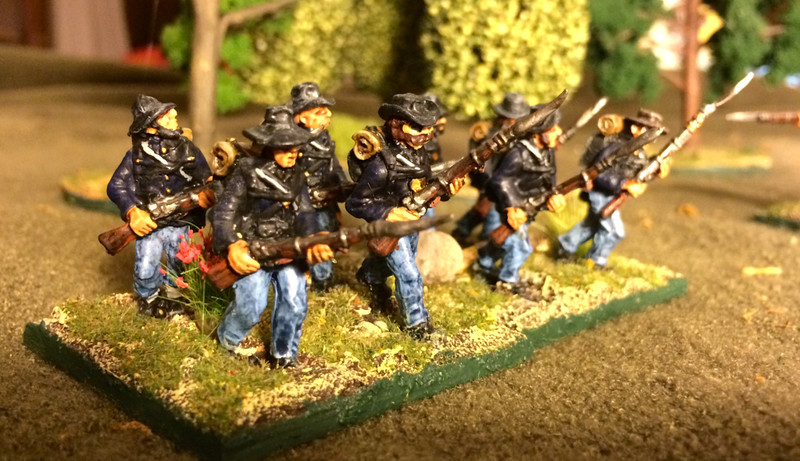
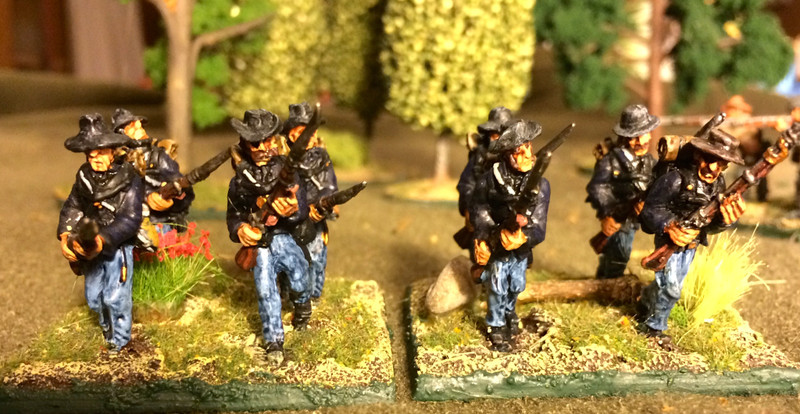
These eight figures are out of production Old Glory 28mm miniatures from whatever came before their Second Edition ACW line - I guess that would been, I dunno, First Edition?  They came from a pack of 25 or so minis called ACW infantry advancing in slouch hat and backpack or some such title.  I bought them easily ten years ago, and as I slowly work through the older seams of the lead pile, I decided to work away at them this winter as I finished my MA thesis.  They’re not really great figures, but they’re useful for bulking out units.  These chaps give me two bases I can use for either my Iron Brigade regiments or I can use them as troops in the Western theatre.  For the federal sack coats I used a craft paint called Midnight from Folkart, thinking it was close to an indigo colour Folkart used to make and I wasn’t that impressed with the result, which looks a little purple to my taste.   However, if you look at these photos of a very good reenactor unit, you see a variety of shades of blue sack coats.  I quite like the scruffy, hard-marching look that these reenactors have achieved. 

 These sculpts are tall and thin, much scrawnier than must reenactors one sees, and they suffer from a lack of detail.  There wasn’t much I could do about the faces About the only ambitiousmthing I tried to do for these chaps was to give them a bit of a suggestion of woodgrain on their muskets, as it’s a look I quite like when other painters get it right.

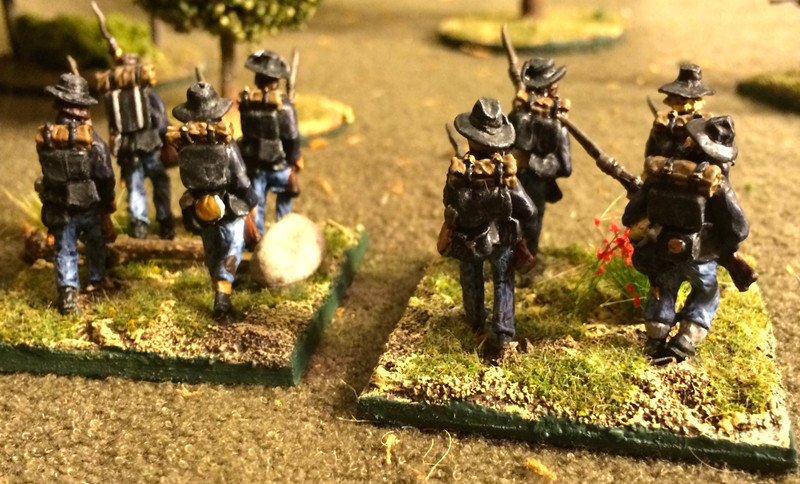
All but one of these sculpts have the double-bag knapsack commonly issued to Union troops.  Most of the figures in the Old Glory pack came with the British Napoleonic style knapsack with the whitened straps - I used most of those for Rebel troops wearing British suplus kit brought over on blockade runners, but I had one left over so I guess he picked it up on the battlefield. I’ve worn replica double back knapsacks on long marches with about a 20 pound load (greatcoat, blanket, change of shirt, socks and underwear, and some personal items) and it is decidedly NOT ergonomic.  The leather straps are unpadded and bite hard into the shoulders.  I could soon see why troops often discarded items on long marches.  For speed and ease of painting I gave them all the same US issue brown blanket.

 Got some rebs done as well, will feature them in another post.  Until then, blessings to your brushes, friends!

These figures bring my 2015 totals to:

28mm:  Foot Figures: 19; Mounted Figures: 10

20mm 

15mm: Armour/Vehicles: 5

6mm:

Kilometres Run: 150


Tuesday, March 24, 2015

First We Take Berlin (Tuesday Night Wargame)


As mentioned a while ago here, I’ve had a hankering to play an old SPI game, Berlin ’85, a Jim Dunnigan design that appeared in Strategy and Tactics Magazine in 1980.
 
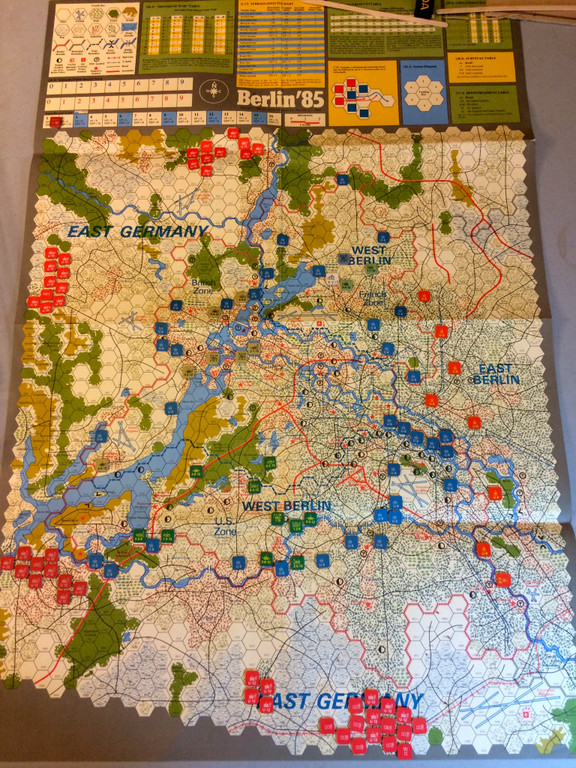
Here you can see the initial setup, from the first of three scenarios, Operation Unity, which assumes a USSR attack on an unreinforced West Berlin garrison with minimal warning.  
 
 
The USSR has three Russian and one Easy German divisions massed to attack, plus the 103rd Guards Airborne Division is ready and may make a play for the city centre.   How long can NATO hold?  We’ll see.

Monday, March 23, 2015

Hawks of the Luftwaffe

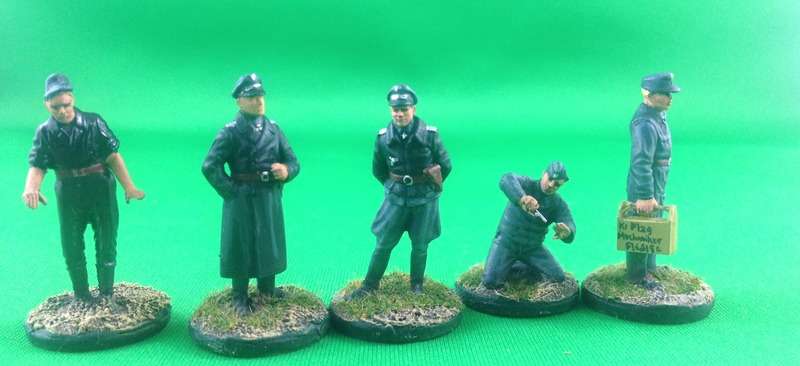
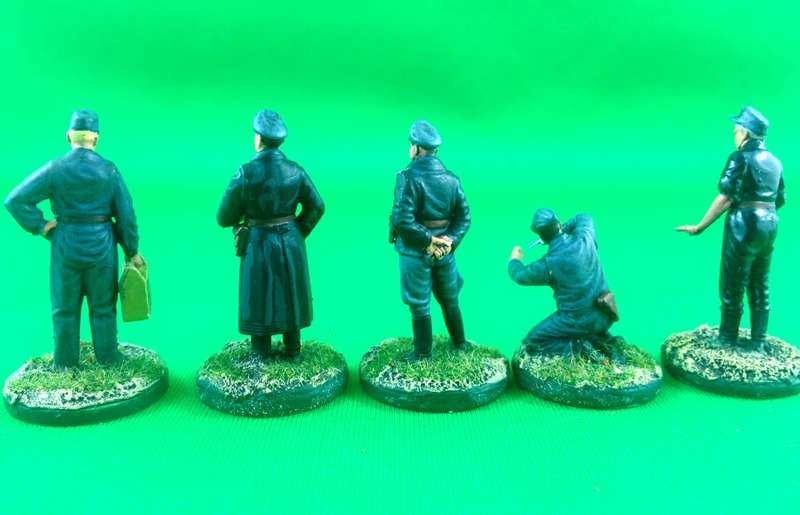
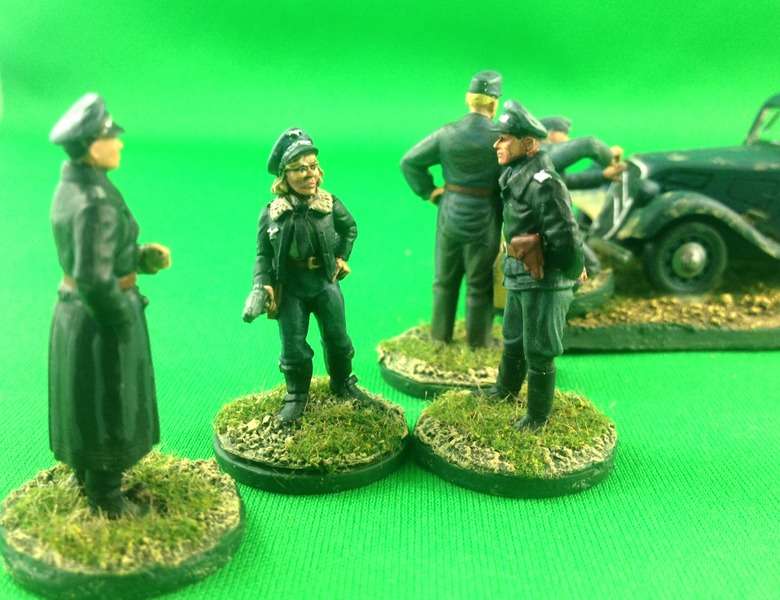
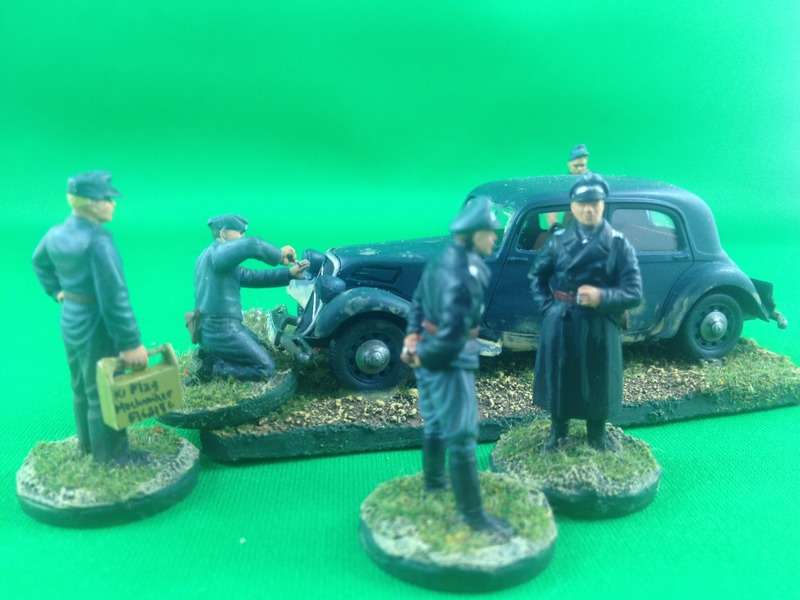
These terrible greenish photos were seen a few months ago in the Analogue Painting Contest, but I didn’t put them up here.   They’re some of the figures that came in a Tamiya kit of a 1/48 scale Citroen car in Luftwaffe service - I showed it off back in November.  Not the greatest figures that I’ve ever done, but I didn’t want to pour too much work into them.  The mechanic on the left looks rather like a zombie, come to think of it.

 I’m planning on using these figures for my pulp Weird War Two project. After all, SS Vampires in a secret installation need to get back and forth, perhaps in a Junkers with blackened windows.   I figure they’ll be useful targets for my commandos.  


This shot reminded me of Nigel Higgins’ article in the latest Wargames Blogger Quarterly on scale.  The lady Aviatrix in the middle is a Bob Murch Pulp Figures 28mm mini, which ls not really the same thing as 1/48 scale.  But, as Mr. Higgins notes, if it looks good, use it.  Our lady aviatrix will get to fly the Fiesler Storch 1/48 scale I’m saving to build after I move, and these tall chaps won’t.  I just hope she doesn’t mind flying at night with sketchy company.

And the big guys can fix her car.

 These figures bring my 2015 totals to:

28mm Foot: 11; Mounted:  10

20mm: 

15mm: Armour/Vehicles: 5

6mm:

Kilometres Run:  144

MA Theses Finished: 1

Blog Archive

Followers